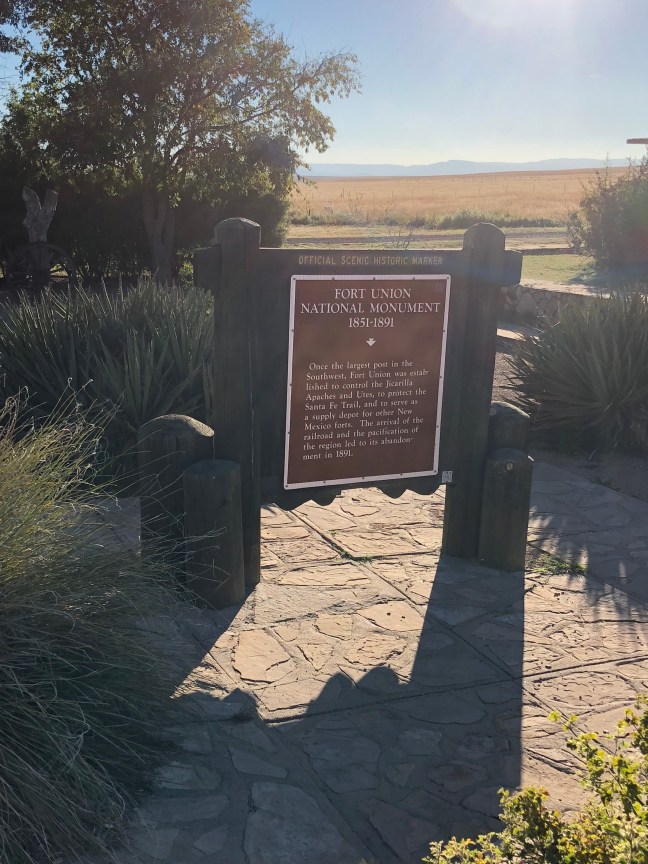
Fort Union National Monument 1851-1891

Fort Union National Monument Historical Marker, NM

Fort Union was the largest military fort in the 19th century in the American Southwest. It was established in 1851 to protect the Santa Fe Trail and lasted for 40 years. The fort was actually three different forts with the third and last fort being the largest of the three.

Fort Union acted as a military supply depot, military garrison and territorial arsenal for the entire region.

Besides the remains of the fort, visitors can also see Santa Fe Trail ruts.

Historical Marker Inscription

Once the largest post in the Southwest, Fort Union was established to control the Jicarilla Apaches and Utes, to protect the Santa Fe Trail, and to serve as a supply depot for other New Mexico forts. The arrival of the railroad and the pacification of the region led to its abandonment in 1891.

Location

35° 44′ N, 105° 2.717′ W.

Traveling North on Interstate 25, Mile Marker 360, near Las Vegas, New Mexico
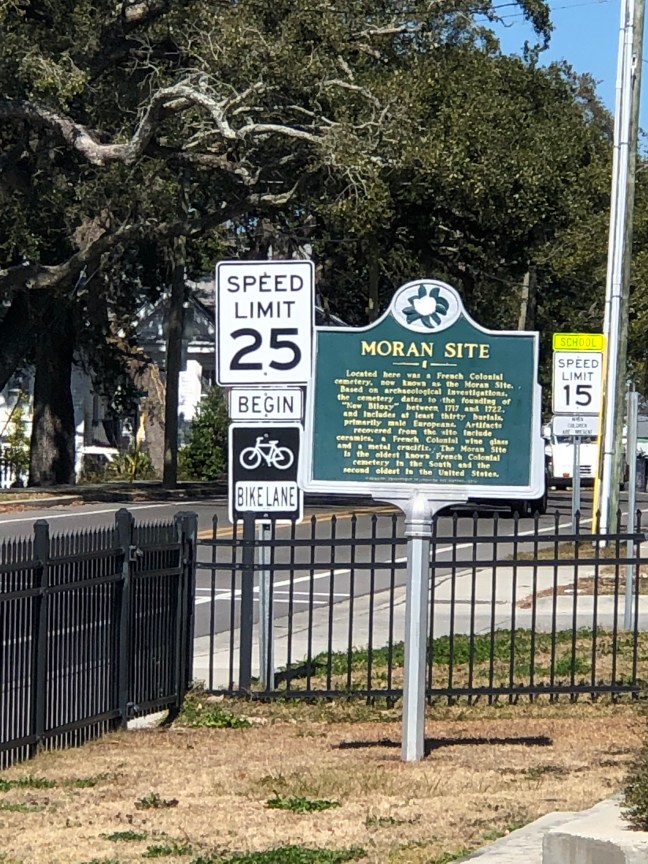
Moran Site, Biloxi, Mississippi

Moran Site, Biloxi, Mississippi

What was once a Colonial cemetery is now the French Colonial Memorial Garden, located at the Biloxi Visitors Center. The memorial park and garden commemorates the 1700s cemetery, which is the second oldest French Colonial cemetery in the United States.

The site dates back to the 1720s when Biloxi was a staging ground for European settlers and African slaves. From here, they would be relocated further into the French Louisiana Colony.

Found here were 32 graves of French Colonial settlers from the 1700s. The graves were mainly European men, and several artifacts were also discovered at this location. Remains were initially uncovered here in 1914, but it was unknown who they belong to. In 1969, Hurricane Camille unearthed more remains. A total of 12 burials were discovered at that time. Excavations post Hurricane Katrina in 2005 located an additional 20 graves.

The site is named after the Moran family who lived and worked at the site in 1952. The dedication of the memorial garden took place in 2017.

Historical Marker Inscription

Located here was a French Colonial cemetery, now known as the Moran Site. Based on archaeological investigations, the cemetery dates to the founding of “New Biloxi” between 1717 and 1722, and includes at least thirty burials, primarily male Europeans. Artifacts recovered from the site include ceramics, a French Colonial wine glass and a metal crucifix. The Moran Site is the oldest known French Colonial cemetery in the South and the second oldest in the United States.

Location

Biloxi Visitors Center, 1050 Beach Blvd, Biloxi, MS 39530

30° 23.719′ N, 88° 54.101′ W