
Vancouver’s Pacific Central Station is made from granite, andesite and brick. The station was opened in November 1919 from land that had previously been tidal mudflats. It was the western terminus of the Canadian Northern Pacific Railway. According to reports of the time, the cost of the station was estimated to have been as high as 1 million dollars.
In 1993, the station began offering intercity bus services as well. It is also the terminus for Amtrak and VIA Rail.
Historical Marker Inscription
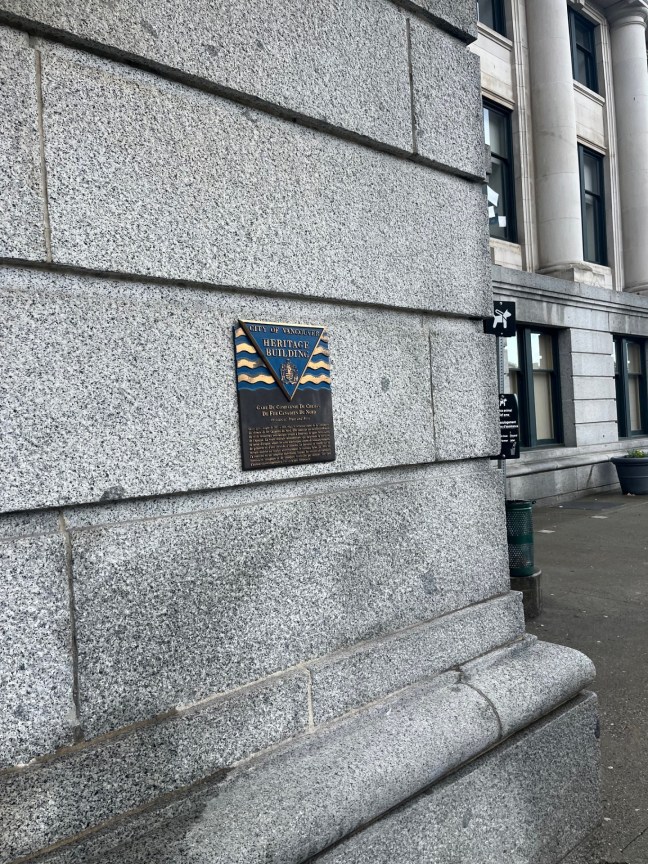
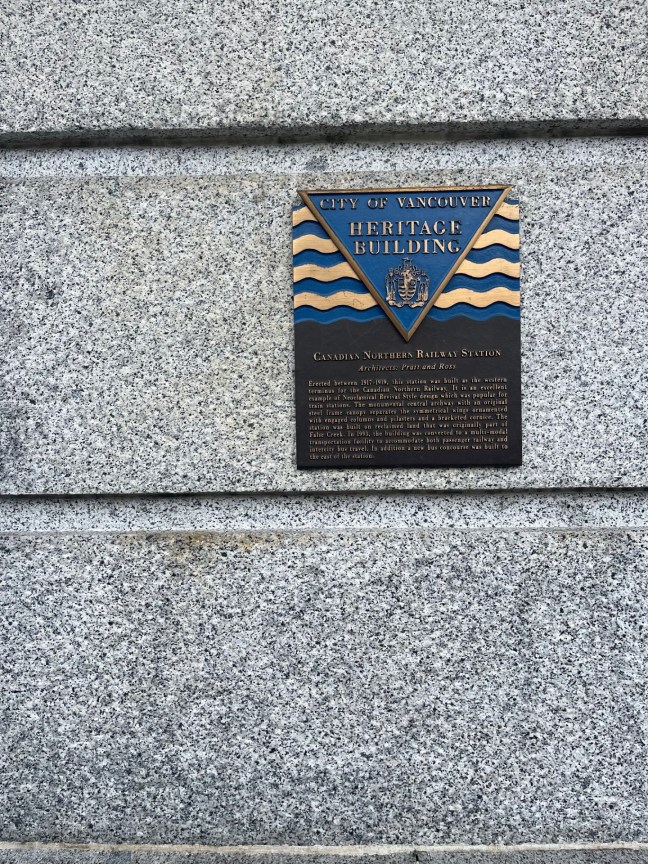
City of Vancouver Heritage Building
Canadian Northern Railway Station
Architect: Pratt and Ross
Erected between 1917-1919, this station was built as the western terminus for the Canadian Northern Railway. It is an excellent example of Neoclassical Revival Style design which was popular for train stations. The monumental central archway with an original steel frame canopy separates the symmetrical wings ornamented with engaged columns and pilasters and a bracketed cornice. The station was built on reclaimed land that was originally part of False Creek. In 1993, the building was converted to a multi-modal transportation facility to accommodate both passenger railway and intercity bus travel. In addition a new bus concourse was built to the east of the station.
Location
49° 16’ 25.350” N, 123° 5’ 57.500” W
Thornton Park, 1166 Main St, Vancouver BC V6A 4B6, Canada
 Historical Markers of the World