Lost River’s First Church, Mathias, West Virginia

Lost River's First Church Historical Marker, Mathias, West Virginia

The Lost River Valley was frequented by many Native American tribes before white settlers came to the area in the 1700s. The headwaters of the river are located south of Mathias, West Virginia. The first church in the area was made of logs and was built in 1768. Besides being a church, it also served as a school and meeting hall.

The church no longer exists, but the historical marker records its original location.

Historical Marker Inscription

300 yards east is the first Lost River Valley Church. Built of logs, prior to 1797, on land deeded by Anthony Miller, 1831, to the Baptists and Presbyterians “to hold in common for a meetinghouse and graveyard.”

West Virginia Historic Commission, 1963

Location

38° 55’ 45.678” N, 78° 50’ 5.832” W

259 WV-259, Mathias, WV  26812, United States
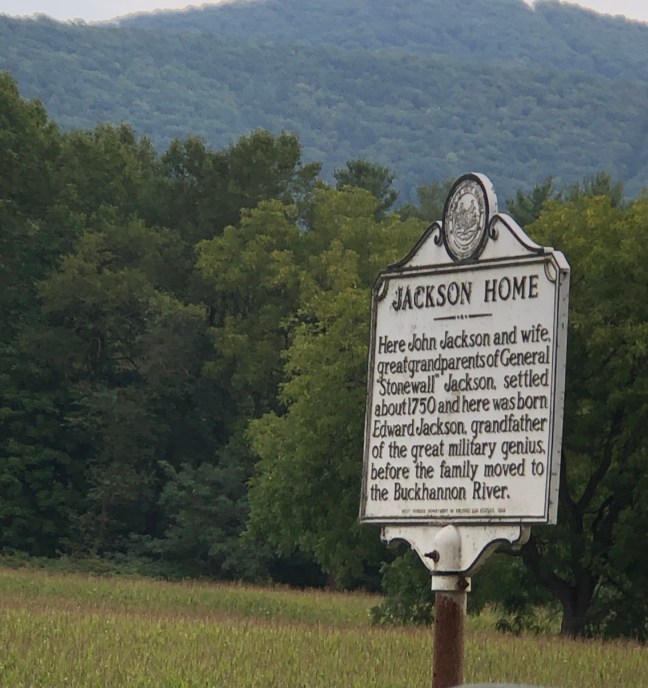
Howard’s Lick/Jackson Home Historical Marker, Mathias, WV

Jackson Home / Howard's Lick Historical Marker, Mathias, WV

This site features two historical markers: Howard’s Lick and Jackson Home.

Currently known as Lee White Sulphur Springs, the first sign refers to what was originally called Howard’s Lick, which is a spring that has become a health resort. The Commonwealth of Virginia gave a portion of the area around the spring to General Henry Lee in 1796, who was a Revolutionary War hero.

When Lee died in 1818, four sons inherited his property, including the property located in Hardy County. Charles Carter Lee eventually took possession of all this land. Charles was the older brother of General Robert E. Lee of American Civil War fame.

The area was also the location of the Jackson home, where John Jackson and his wife lived starting in 1750. These were the great grandparents of another Confederate war general, General Thomas Jonathan “Stonewall” Jackson.

Historical Marker Inscription

Side 1

Howard’s Lick

Howard’s Lick, also known as Lee White Sulphur Springs, was once owned by General Henry “Light Horse Harry” Lee of Revolutionary War fame. It was owned later by Charles Carter Lee, brother of the beloved General Robert E. Lee.

Side 2

Jackson Home

Here John Jackson and wife, great grandparents of General “Stonewall” Jackson, settled about 1750 and here was born Edward Jackson, grandfather of the great military genius before the family moved to Buckhannon River.

Location

13208 WV-259, Mathias, West Virginia 26812, United States

38° 52′ 48.132″ N, 78° 51′ 54.930″ W

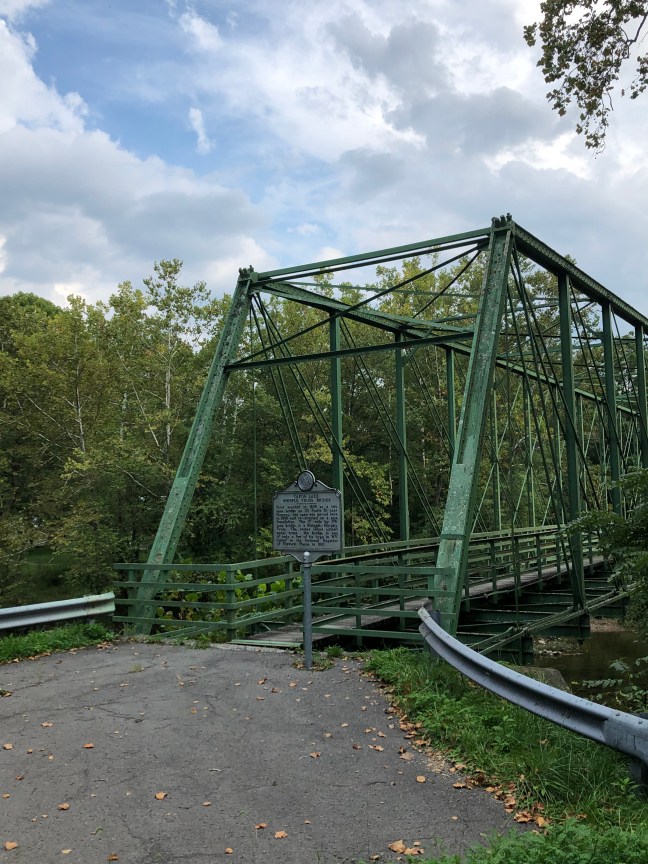
Capon Lake Whipple Truss Bridge, West Virginia

Capon Lake Whipple Truss Bridge, WV

The Capon Lake Whipple Truss Bridge was built in 1874 to replace a wooden-covered bridge. The former bridge had been destroyed during the Civil War by Confederate soldiers.

The bridge was built by T.B. White and Sons using the Whipple truss, which was created by Squire Whipple and patented in 1847.  It was a stronger version of the Pratt truss and was known as the “Double-intersection Pratt” due to the fact that the diagonal tension members crossed two panels as opposed to the one used in the Pratt design. It typically had a trapezoidal look. Because it was stronger and firmer than the original design, it was embraced by the railroads.

The Capon Lake Whipple Truss Bridge is West Virginia’s oldest extant metal truss. It stopped being used in 1991 after the construction of a new bridge. It was added to the National Register of Historic Places in 2011.

Historical Marker Inscription

First erected in 1874 as a two span bridge on US Route 50 near Romney, one span was moved here in 1938 and re-erected on a new foundation. the 17′ wide by 176′ long bridge is a Whipple-Murphy Truss. The state’s oldest extant metal truss, the bridge is one of only a few of its type in WV. Listed in the National Register of Historic Places in 2011.

Location

10001-10099 Carpers Pike, Yellow Spring, West Virginia 26865 United States

39° 9′ 32.150″ N, 78° 32′ 5.820″ W