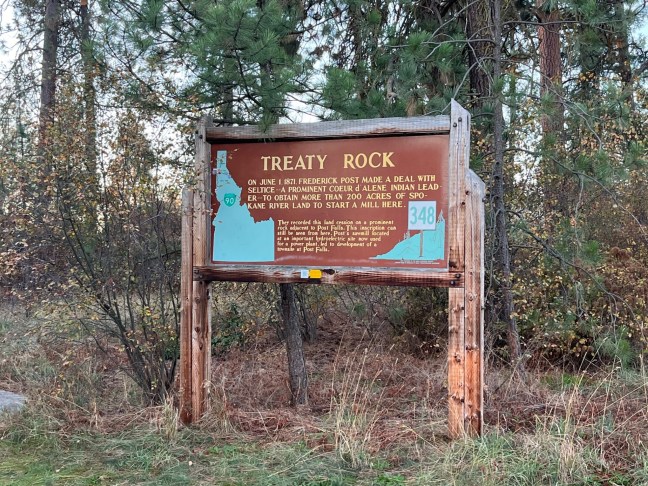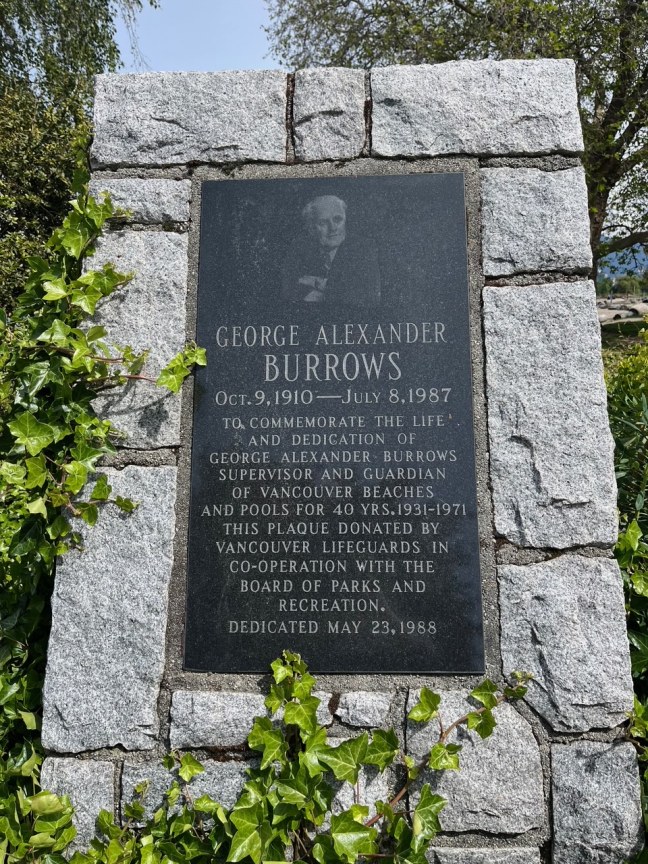
George Alexander Burrows Historical Marker, Vancouver, BC

George Alexander Burrows Historical Marker Vancouver

George Burrows was a competitive swimmer. In the 1920s, he attended the University of British Columbia and became the provincial 200-yard freestyle champion. He was selected to represent Canada in the 1932 Summer Olympics. He competed in the 400-meter and 1500-meter freestyle events but didn’t pass the first round. He competed in the 4 x 200-meter freestyle relay team event. His team finished fourth.

After completing his Olympic career, Burrows continued the career he had started the year before: Supervisor of Beaches and Pools. His father, Fred, had held the same position. Burrows would remain in this position for 40 years, retiring in 1971.

Historical Marker Inscription

George Alexander Burrows

Oct. 9, 1910-July 8, 1987

To commemorate the life and dedication of George Alexander Burrows supervisor and guardian of Vancouver beaches and pools for 40 years. 1931-1971

This plaque donated by Vancouver lifeguards in co-operation with the Board of Parks and Recreation.

Dedicated May 23, 1988

Location

49° 16’ 25.500” N, 123° 9’ 16.680” W

Kitsilano Beach Park, Vancouver BC V6J 5N2, Canada

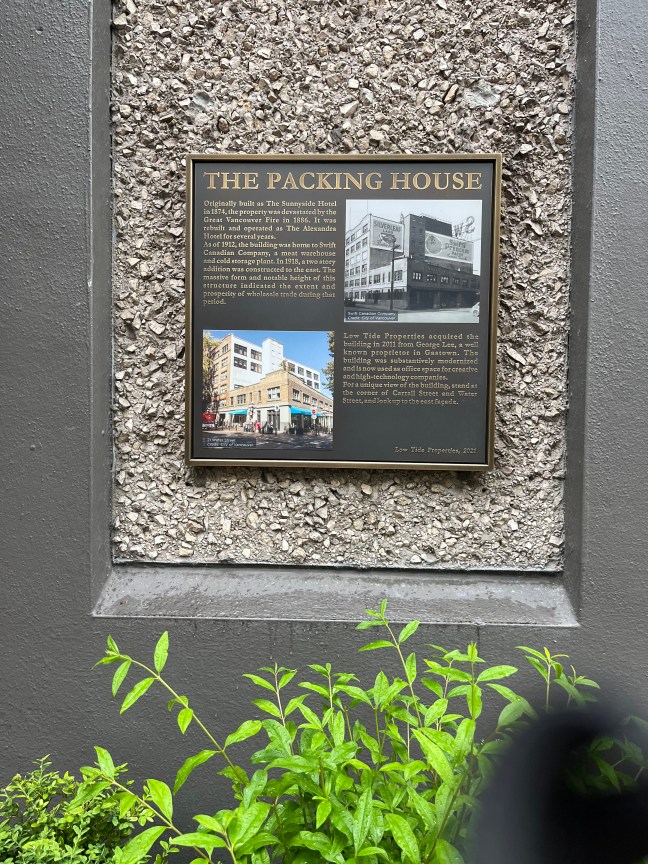
The Packing House Historical Marker, Vancouver, Canada

The Packing House Historical Marker, Vancouver, British Columbia

The Swift Canadian Packing House and Office Building occupies the entire lot in Gastown, at 21 Water Street in Vancouver. It was built in 1912 as a four-story meat warehouse and packing plant, and it was designed to be fireproof.

In 1918, a two-story addition was added to the east end, and then an additional two stories were added in 1925 for office space.

Gastown was the earliest section of Vancouver to house commercial buildings and warehouses. It is located at a major point between the Pacific shipping routes and the railway terminus.

Another interesting fact about this location is that the first butcher in Gastown was also located here. George Black built his butcher shop here in 1868. In 1885, he sold the property to Alfred Coughtrey who then sold it to Volkenburg & Brothers around 1888. The latter would then sell his business to B.C. Cattle Co. Ltd., which would become Swift Canadian Co. Ltd.

In 1969, the Packing House was converted into commercial office building space.

Historical Marker Inscription

Originally built as The Sunnyside Hotel in 1874, the property was devastated by the Great Vancouver Fire in 1886. It was rebuilt and operated as The Alexandra Hotel for several years.

As of 1912, the building was home to Swift Canadian Company, a meat warehouse and cold storage plant. In 1918, a two story addition was constructed to the east. The massive form and notable height of this structure indicated the extent and prosperity of wholesale trade during that period.

Low Tide Properties acquired the building in 2011 from George Lee, a well known proprietor in Gastown. The building was substantively modernized and is now used as office space for creative and high-technology companies.

For a unique view of the building, stand at the corner of Carrall Street and Water Street, and look up to the east façade.

Low Tide Properties, 2021

Location

49° 17’ 1.182” N, 123° 6’ 18.480” W
45 Water St, Vancouver BC V6B 1A1, Canada

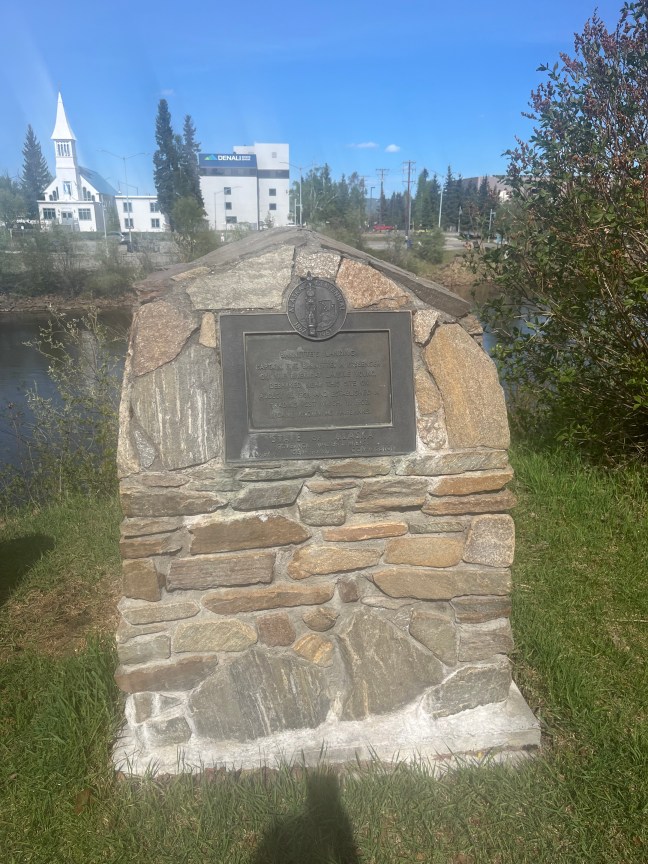
Joe Crosson Historical Marker, Fairbanks, Alaska

Joe Crosson Historical Marker, Fairbanks, Alaska

Joe Crosson was the brother of popular female aviator, Marvel Crosson. He was best known as an Alaskan pilot, often doing mercy missions. He helped search for the missing pilot Carl Ben Eielson. He flew the bodies of Will Rogers and Wiley Post back to the U.S. after they crashed in Alaska.

Crosson also flew during the winter in an open cockpit. He was tasked with carrying a serum to Barrow, AK. He was also known as the first pilot to land on a glacier.

Historical Marker Inscription

A Tribute to the Memory of
Joe Crosson
1903-1949

Pioneer Alaska Aviator
Who helped put Fairbanks and
Alaska on the air map of the world

Joe Crosson landed many times
On the Chena River near this spot

Dedicated during Golden Days
observances – July 20, 1958

Location

64° 50’ 37.860” N, 147° 43’ 20.082” W

First Ave, Fairbanks, AK  99701, United States

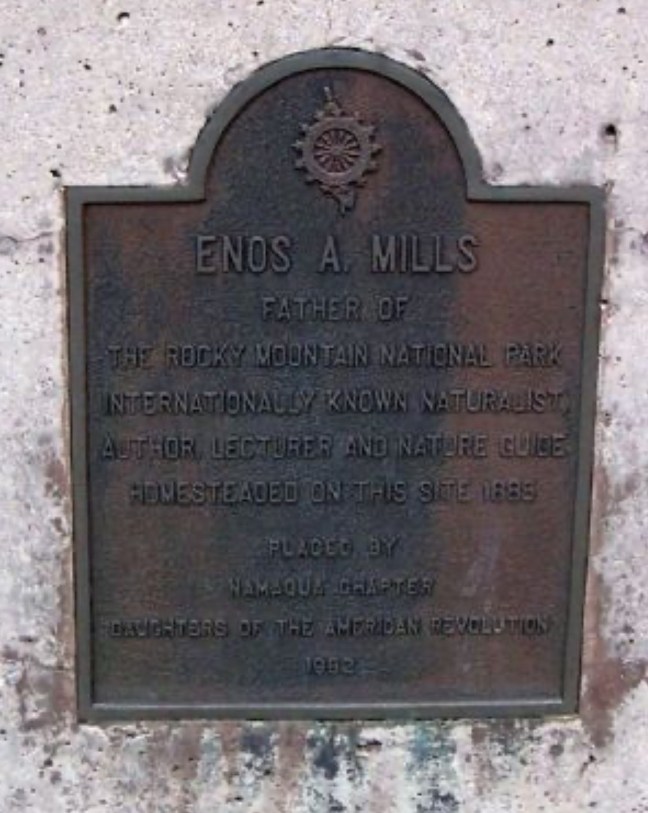
Enos A. Mills Historical Marker, Estes Park, Colorado

Enos A. Mills Historical Marker, Estes Park, Colorado

Born in 1870 and originally from Kansas, Enos A. Mills moved to Colorado during the early years of his life. He first ascended Longs Peak (14,255 feet tall) at 15. In 1887, Mills moved to Montana but would spend his summers traveling the West Coast.

After meeting naturalist John Muir in 1889 in California, Mills dedicated his life to conserving the natural world. Mills returned to Colorado in 1902 and bought a homestead in Estes Park. From here, he would take guests into the Rocky Mountain wilderness.

From 1902 to 1906, Mills worked as the Colorado State Snow Observer, where he measured snow depths. This helped predict spring and summer runoffs. From 1907 to 1909, he was also a government lecturer on forestry.

But Mills is best known for trying to protect the area around Longs Peak and turn it into a national park. Working with groups like the Sierra Club and the Daughters of the American Revolution, Mills finally got Congressional approval to create Rocky Mountain National Park in 1915.

Mills would summit Longs Peak 340 times both by himself and as a guide. He became known as the “Father of Rocky Mountain National Park”. Mills died in 1922 at the age of 52.

Historical Marker Inscription

Father of
the Rocky Mountain National Park
internationally known naturalist, author, lecturer and nature guide
Homesteaded on this site in 1885

Placed by NAMAQUA Chapter, Daughters of the American Revolution
1952

Location

40° 16.795′ N, 105° 32.487′ W
Estes Park, Colorado

Stephen Tyng Mather Historical Marker, Tucson, Arizona

Stephen Tyng Mather Historical Marker, Tucson, Arizona

Stephen Tyng Mather was instrumental in helping persuade Congress to create the National Park Service (NPS). The park service was established in 1916 by President Woodrow Wilson, and Mather was appointed as the first NPS director in May 1917.

The goal of the NPS was to manage the national parks, which had been largely neglected before this time. Mather believed that the primary criterion for a national park was its scenery.

During his time as the director, he helped expand the NPS into the east, adding the Great Smoky Mountains, Shenandoah and Mammoth Cave as national parks. He also made the case for making a Sand Dunes National Park.

His tenure ran from 1917 to January 1929. He retired from the office after suffering a stroke. Mather would die a year after the stroke.

Historical Marker Inscription

Stephen Tyng Mather

July 4, 1867 – Jan. 22, 1930

He laid the foundation of the National Park Service. Defining and establishing the policies under which its areas shall be developed and conserved unimpaired for future generations. There will never come an end to the good that he has done.

Location

32° 10’ 48.720” N, 110° 44’ 10.698” W

3515 S Old Spanish Trail, Tucson, AZ  85730, United States

Horseless Carriages Historical Marker, Fort Worth, Texas

32° 45’ 29.178” N, 97° 19’ 57.948” W 186–198 E Belknap St, Fort Worth, TX 76102, United States

Horseless carriages (automobiles) came to Fort Worth sometime between 1900 and 1902. There is debate as to whether the first was driven by Lew Dockstader, a minstrel, or H.R. Cromer, who owned a bike store.

Automobile owners were required to drive at a maximum speed of 12 miles per hour. All cars were required to have a license number painted on the vehicle. They had to have two lights and a horn or gong. And they had to be registered with the government.

Historical Marker Inscription

Automobiles appeared in Fort Worth around 1902. By 1904, vehicles had to be registered, display a painted license number, and be fitted with two lights and a horn or gong.

Twelve miles per hour was the top speed allowed, with horns or gongs sounded 100 feet before each crossing. On August 24, 1903, a speed record of 1 hour and 35 minutes was set for the 30-mile trip between Fort Worth and Dallas, and the Star-Telegram reported “The automobile is no longer a toy or luxury.” By 1909, a motorcycle police officer was needed to catch speeders.

Manufacturing plants and many dealerships opened during the “Boom Years” of the 1920s. Slow sales during the years of the Great Depression and World War II were followed by a post war boom that required new roads and highways. The state’s first toll road opened in 1953 between Fort Worth and Dallas.

Heritage Trails 2006

Sponsored by: Frank Kent Cadillac

Location

32° 45’ 29.178” N, 97° 19’ 57.948” W
186–198 E Belknap St, Fort Worth, TX  76102, United States

Gas Works, Yreka, California Historical Marker

Gas Works, Yreka, California Historical Marker

This historical marker commemorates the Yreka Gas Works. It was the company that first lighted the city streets on December 17, 1859. The marker sits in front of the Best Western Miner’s Inn.

No other information is available about this location.

Historical Marker Inscription

Site of the Yreka Gas Works which on Dec. 17, 1859 first lighted Yreka Streets. The gas was made by burning pine pitch.

Location

41° 43’ 59.148” N, 122° 38’ 6.228” W

300 N Main St, Yreka, CA  96097, United States

The Cherub Gate Historical Marker, New York City

Cherub Gate at Trinity Church, New York City

A cherub decorates the back entrance of Trinity Church. The cherub originally adorned the St. Mary-le-Bow church which was located in London’s East End. This church was designed and built by Christopher Wren. It was completed in 1680 but was destroyed during the German Blitz in May 1941 during World War II.

Trinity Church was the sister church to St. Mary-le-Bow and pledged $50,000 to the London congregation to rebuild the parish. The cherub had been found in the rubble of the destroyed church. After the London church was rebuilt around 1963-1964, the cherub was presented to Trinity Church.

Historical Marker Inscription

The cherub above is a gift to Trinity Church from the Church of St. Mary le Bow in London which was designed by Sir Christopher Wren in 1680 and was destroyed in an air raid on May 10, 1941. The cherub survived the bombing and was presented to Trinity Church on June 11, 1964

Location

40° 42’ 30.492” N, 74° 0’ 45.180” W

78 Trinity Pl, New York, NY  10038, United States

New Mexico Historic Women Marker Initiative, Santa Fe, New Mexico

New Mexico Historic Women Marker Initiative Historical Marker

The Historic Women Marker Initiative of 2007 had a goal of providing information on important New Mexican women on a portion of the state’s Official Scenic Historic Markers. Before the Initiative, few markers mentioned women.

The initial phase of the project started with 75 markers and was concluded in 2010. An additional 10 were added in 2015, and another 25 are planned to be installed to bring the number to 100.

The program received additional funding in 2022.

Historical Marker Inscription

The New Mexico Historic Women Marker Initiative was founded in 2005 by members of the New Mexico Women’s Forum in a statewide effort to recognize women’s contributions to New Mexico history on the state’s Official Scenic Historic Markers. The Initiative ensures that women’s diverse histories will be remembered and told, and will inspire and provide a guide for future generations. The 2006 Legislature funded the project.

Location

35° 49’ 31.020” N, 105° 58’ 41.592” W
W Frontage Rd, Santa Fe, NM  87506, United States

Birthplace of Columbia University Historical Marker, New York City

Columbia University Historical Marker, New York City, NY

Columbia University began as an all-boys school in 1754 in New York City’s lower Manhattan area. It was originally called King’s College and was created via a royal charter granted by Great Britain’s King George II. The first class was held in a schoolhouse that was part of Trinity Church.

Many of the students of King’s College went on to illustrious careers. These include Alexander Hamilton, John Jay and Robert R. Livingston.

During the American Revolution, classes were suspended from 1776 to 1783.  In 1784, King’s College changed its name to Columbia College. In 1857, the college moved from Park Place to Madison Avenue. It was moved once again in 1896 to its current location in Morningside Heights. It was also renamed again to Columbia University. The university started admitting women in 1983.

Trinity Church, New York City, NY

Historical Marker Inscription

In 1752 Trinity Church gave a grant of land for a new college.

On July 17, 1754, the first class of King’s College, which was to become Columbia University, met in the schoolhouse of Trinity Church located across this street.

The charter for the college was granted on October 31, 1754, during the reign of King George II.

Location

40° 42’ 28.458” N, 74° 0’ 44.930” W

75 Broadway, New York, NY  10006, United States