Emigrant Road, Jerome, ID

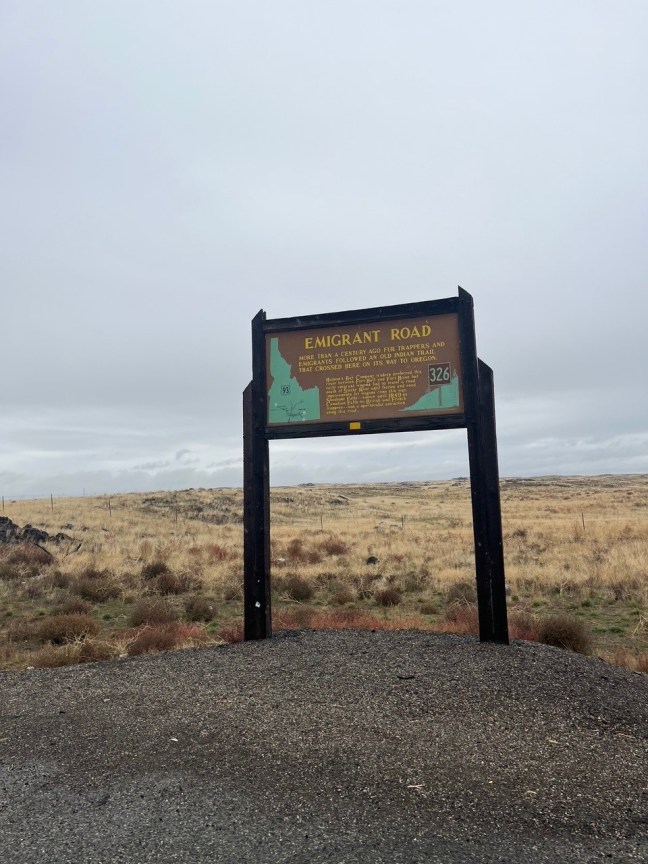
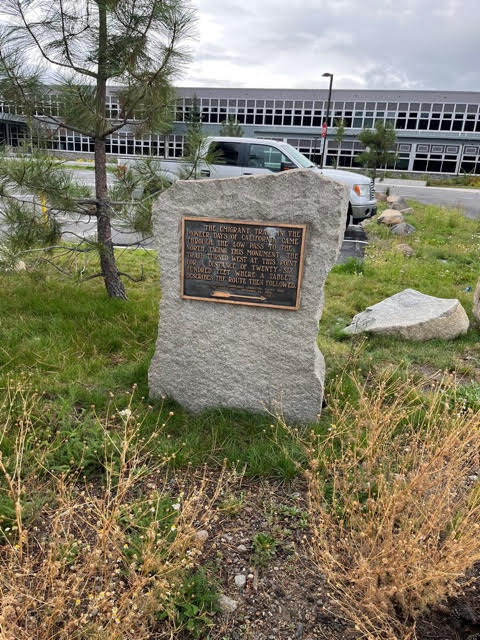
Emigrant Road Historical Marker, Jerome, ID

Known as the Emigrant Road, this route was favored by the Hudson’s Bay Company during the mid-1800s. The road ran from Snake River in the north to South-Central Idaho. As an alternative to the Oregon Trail, which tended to be difficult, the Hudson’s Bay Company traders used it to go between Fort Hall and Fort Boise.

Emigrants, on the other hand, had to take a route further south since the road was not initially designed to allow for wagons. With later improvements, emigrants would be able to use this route.

There is a dispute amongst historians as to whether this road was part of the North Alternate to the Oregon Trail, which would have made it part of the Oregon Trail System.

Historical Marker Inscription

More than a century ago, fur trappers and emigrants followed an old Indian trail that crossed here on its way to Oregon.

Hudson’s Bay Company traders preferred this route between Fort Hall and Fort Boise, but early emigrant wagons had to travel a road south of Snake River until ferries and road improvements let wagons come this way. Shoshone Falls — known until 1849 as Canadian Falls to British and French trappers — was a spectacular attraction along this road.

Location

42° 37’ 13.032” N, 114° 26’ 57.978” W
US-93 N, Jerome, ID  83338, United States

Avart-Peretti House, New Orleans, Louisiana

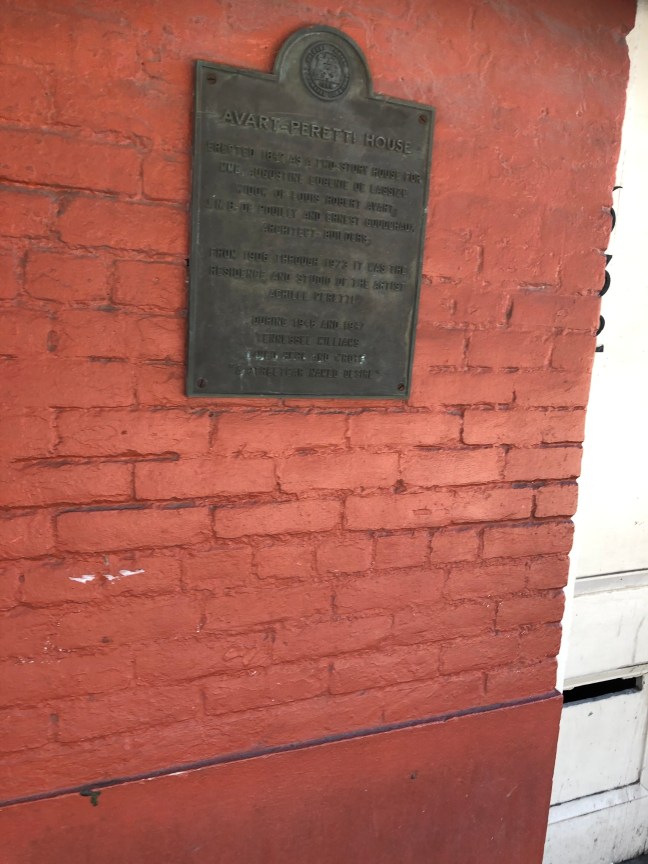
Avart-Peretti House Historical Marker, New Orleans, Louisiana

While built as a home in 1842 for Mme. Augustine Eugenie de Lassize, the Avart-Peretti House is most known as the location where Tennessee Williams wrote A Streetcar Named Desire. Williams made frequent visits to New Orleans, first coming to the city in 1938. And it was in New Orleans that he renamed himself Tennessee. 

According to reports, the Avart-Peretti House was said to be Williams’s favorite place to stay. In this location, he was close to the Desire streetcar line, and the house was even the inspiration for the fictional home in the play.

The house was also the home of sculptor Achille Peretti from 1906 to 1923. Hailing from Italy, the artist eventually became an American citizen.

The house is currently not open to the public.

Historical Marker Inscription

Erected 1842 as a two-story house for Mme. Augustine Eugenie de Lassize widow of Louis Robert Avart J.N.B. de Pouilly and Ernest Goudchauz architect-builders

From 1906 through 1923 it was the residence and studio of the artist Achille Peretti

During 1946 and 1947 Tennessee Williams lived here and wrote “A Steetcar Named Desire”

John Phillips Marker, Fort Laramie, Wyoming

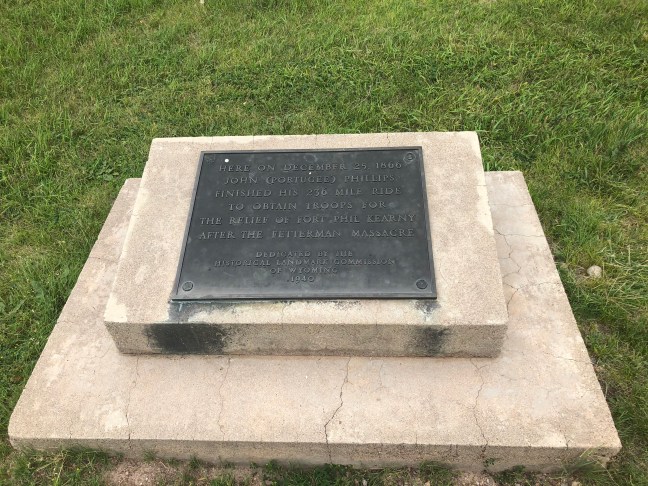
John Portugee Phillips Historical Marker, Fort Laramie, WY

This was the ending point for John “Portugee” Phillips’s great 236-mile ride from Fort Phil Kearney to Fort Laramie. After the attack by Red Cloud on Fort Kearney, the fort was low on men and military equipment. U.S. Colonel Henry B. Carrington had been in charge of the fort. He asked for a volunteer to make a ride to request reinforcements from the nearest fort – which was Fort Laramie.

The ride was not easy. There was a blizzard, and it was extremely cold. Yet, Phillips managed to successfully make the ride in two days and get to Fort Laramie on Christmas night. Phillips’s horse died from exhaustion.

Read this for a full background on the massacre and the ride it inspired.

Historical Marker Inscription

Here on December 25, 1866
John (Portugee) Phillips
finished his 236 mile ride
to obtain troops for
the relief of Fort Phil Kearny
after the Fetterman Massacre.

Dedicated by the Historical Landmark Commission of Wyoming
1940

Location

42° 12’ 9.660” N, 104° 33’ 29.430” W

Fort Laramie National Historic Site, Fort Laramie, WY  82212, United States

Jefferson Parish Historical Marker, Louisiana

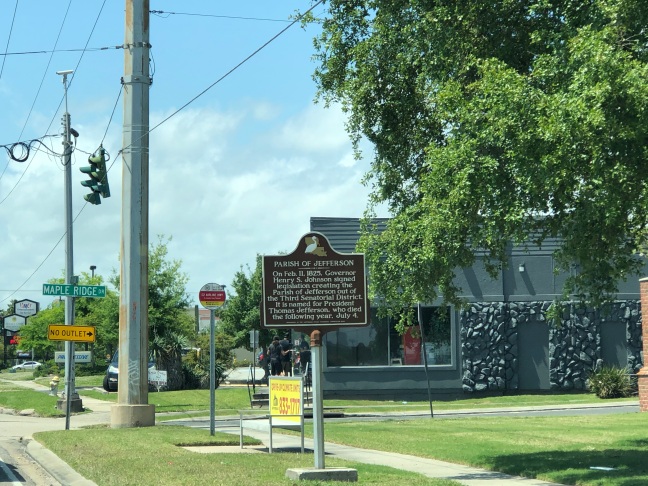
Jefferson Parish Historical Marker, Louisiana

Established in 1825, Jefferson Parish, Louisiana, was named after Thomas Jefferson. Thomas Jefferson was instrumental in the Louisiana Purchase, where the burgeoning United States purchased the territory from France in 1803.

From at least the 1600s, the area was home to Native American tribes. Other groups that called the area home included the Germans, Spaniards, Africans, Italians, Acadians and more.

Prior to 1874, the parish borders stretched from St. Charles Parish to Felicity Street in New Orleans. As Orleans Parish grew, however, it annexed areas of Jefferson Parish. The current borders were redrawn to their current location in 1874.

Historical Marker Inscription

On Feb. 11, 1825, Governor Henry S. Johnson signed legislation creating the Parish of Jefferson out of the Third Senatorial District. It is named for President Thomas Jefferson, who died the following year, July 4.

Location

29° 58’ 23.988” N, 90° 8’ 26.030” W

1373–1379 Airline Dr, Metairie, LA  70001, United States

Lancaster Trading Post, Fort Laramie

Fort Platte Trading Post Historical Marker Wyoming

Located approximately one mile from Fort Laramie (formerly known as Fort William), Fort Platte was built by fur trader Lancaster Lupton. Lupton made the post as a competitor to Fort William, and he had previously created Fort Lupton in Colorado. So, Lupton already had a system in place to make these types of ventures successful.

Despite the fort being successful, Lupton had to sell it to Pratte & Cabanne in 1843 due to his own debts. It was eventually abandoned within a few years of the sale.

Historical Marker Inscription

A Trading Post Built By
Lancaster P. Lupton
in 1841,
Stood Fifty Yards to the
North.

Placed By
The Historical Landmark Commission
Of Wyoming
July 1951

Location

42° 12’ 33.210” N, 104° 32’ 15.300” W

1218–1286 WY-160, Fort Laramie, WY  82212, United States

The Oregon Trail – Cold Spring Camping

Cold Spring Camping Ground Historical Marker, Guernsey, WY

The Cold Springs campground was a major camping spot along the Oregon-California-Mormon Trail. The marker indicates not only the spot where emigrants stopped. It also indicates the rifle pits that soldiers used to protect the area.

Historical Marker Inscription

The Oregon Trail

1841

Cold Spring Camping Ground. Rigle Pits On Brow Of Hill 500 Feet North

Erected by the Historical Landmark Commission of Wyoming

1943

Location

42° 16’ 1.470” N, 104° 47’ 25.680” W

1251 US-26, Guernsey, WY  82214, United States

Pocahontas Mounds Historical Marker 1, Flora, Mississippi

Evolution of the Pocahontas Mounds Flora Mississippi

Consisting of two mounds (Mound A and Mound B), they were built by Native Americans from around 1000 to 1300 AD.  Atop the mounds would have been a building. On Mound A, it would have either been the chief’s residence or a temple. There was also a village that surrounded the mounds. It appears that the mounds were built over time, ranging from the Coles Creek to the Plaquemine periods.

While Mound A is maintained by the Mississippi Department of Transportation and is part of a park, Mound B is not part of the park. Both mounds are listed on the National Register of Historic Places.

Pocahontas Mounds Historical Marker 1 Flora, MS

Historical Marker Inscription

Built and used between A.D 1000 and 1300, this platform mound and a nearby burial mound mark the ceremonial and political seat of a regional chiefdom of the Plaquemine culture. A thatched, clay-plastered ritual temple or chief’s lodging stood atop this mound. Dwellings of villagers occupied surrounding fields.

Location

32° 28’ 14.112” N, 90° 17’ 17.598” W

US-49 N, Flora, MS  39071, United States

McAllister’s Mill Historical Marker

McAllister's Mill Historical Marker

A ruin located on the Gettysburg Battlefield, it was a significant stopping point on the Underground Railroad (UGRR). Said to have been built by James Getty and another person in 1790, in 1836, it became the meeting ground of a group of men whose fathers had fought in the War of Independence. They were there to celebrate the Fourth of July.

Here, the men organized, and James McAllister was named the mill owner and chair. The men passed several resolutions, including ones around freeing the slaves. The Star & Republican Banner, a Gettysburg newspaper, named the meeting the “Anti-Slavery Meeting at McAllister’s”. Over the years, the Anti-Slavery Society became more influential, and many members began helping slaves from Maryland to escape to the North.

During the Battle of Gettysburg, McAllister’s property was caught in the fighting, and many soldiers were buried on the grounds. Little remains of the mill, and it is privately owned.

Historical Marker Inscription

At their grist mill on nearby Rock Creek, James McAllister and his family provided temporary shelter to hundreds of fugitive slaves. Now in ruin, it was part of one of the earliest UGRR networks through which freedom seekers passed on their way north. It was the site of a significant gathering of abolitionists on July 4, 1836, that led to the formation of the Adams County Anti-Slavery Society, an early and influential abolitionist organization.

Location

39° 48’ 25.872” N, 77° 13’ 0.030” W

1382–1398 Baltimore Pike, Gettysburg, PA  17325, United States

Sahuaro Ranch Historical Marker, Glendale, AZ

Sahuaro Ranch Glendale, AZ

Sahuaro Ranch is a 17-acre ranch that has been preserved by the City of Glendale. William Bartlett was 36 years old in 1886 when he came from Peoria, Illinois, to invest in the ranch located north of Phoenix. He and his brother Samuel purchased 640 acres under the Desert Land Act of 1877.

Being able to homestead in the area only became possible after the creation of the Arizona Canal, which was completed in 1885, opening up the Salt River Valley to agriculture. Bartlett was a successful rancher, growing everything from fruit to grain to cotton. The ranch itself was well-landscaped with rose bushes, palms and many other types of plants. The ranch also raised cattle, hogs and bulls.

By 1887,  the Adobe House, a horse barn and a blacksmith shop was on the property. The fruit orchard also expanded in 1890, including olives and oranges. These were some of the first grown in the area. The Guest House was built in 1898 by J. L. Silsbee, a Chicago architect who was an employer of Frank Lloyd Wright.

The ranch thrived throughout the 1900s, with other owners, including P.E. Bradshaw and Richard W. Smith. By the 1970s, much of the ranch had been sold off. The City of Glendale purchased the remaining 80 acres in 1972 and converted it into a park and historical area and other facilities.

Historical Marker Inscription

Sahuaro Ranch Historical Marker, Glendale, AZ

National Register of Historic Places
Listed March 7, 1980
United States Department of the Interior

Sahuaro Ranch was one of the first farms in the Glendale area and a reminder of Glendale’s agricultural beginnings. Started by wealthy Illinois businessman William H. Bartlett in 1886, the ranch was a commercial operation and became known as the “Showplace of the Valley.” Ranch owners, including Bartlett, produced fruit, grains and cotton, ranched cattle, raised horses and operated a dairy. As farms gave way to houses, the City of Glendale purchased the remaining parts of the ranch in 1977. The City preserved 17 acres of the original ranch along with 13 buildings and a historic landscape of trees and irrigation ditches.

Location

33° 34’ 31.488” N, 112° 11’ 18.870” W
Sahuaro Ranch Park, Glendale, AZ  85302, United States

Leslie Jensen Scenic Drive Historical Marker, Hot Springs, SD

Leslie Jensen Scenic Drive Hot Springs SD Historical Marker

This highway along Fall River is dedicated to Governor Leslie Jensen. He was the Republican 15th Governor of South Dakota from January 5, 1937 to January 3, 1939.  He was a native of Hot Springs, South Dakota.  Jensen was known as the “father of the modern highway system in South Dakota”.

While successful in office, Jensen decided not to run for a second term as governor and instead ran for the U.S. Senate, but he was defeated in the primary. He served in World War I and World War II.  He was honorably discharged in 1945.

Historical Marker Inscription

This highway along Fall River is dedicated to Leslie Jensen, 15th Governor of South Dakota 1937-1939, a native of Hot Springs, and a son of Chris Jensen, Black Hills Pioneer and Lillie May Haxby Jensen. Educated in Hot Springs, Culver Military Academy and the University of South Dakota, he took an early interest in the Military and was a Lieutenant in the 4th South Dakota Infantry on the Mexican Border in 1916-17 and when that organization became the 147th Field Artillery in World War I, he went to France with it and was the Regimental Adjutant. Staying with the 147th, he was its Lieutenant Colonel in 1937 when, as Governor, he became his own Commander-in-Chief. Promoted to Colonel in 1941, he took his Regiment to the South Pacific in World War II and when the Regiment was battalionized in 1943, he served with distinction as a Base Commander on the staff of the Commanding General of the Sixth Army. In 1921 he was appointed Collector of Internal Revenue for the District of South Dakota serving until 1934 when he returned to Hot Springs and to the telephone business which his father had started in 1894. His administration, in 1937, initiated

Reverse Side

You Are Entering
Hot Springs,
Sites Of
National and State
Soldiers Homes

Location

1301 Fall River Rd, Hot Springs, SD  57747, United States
43° 25’ 8.892” N, 103° 27’ 31.680” W