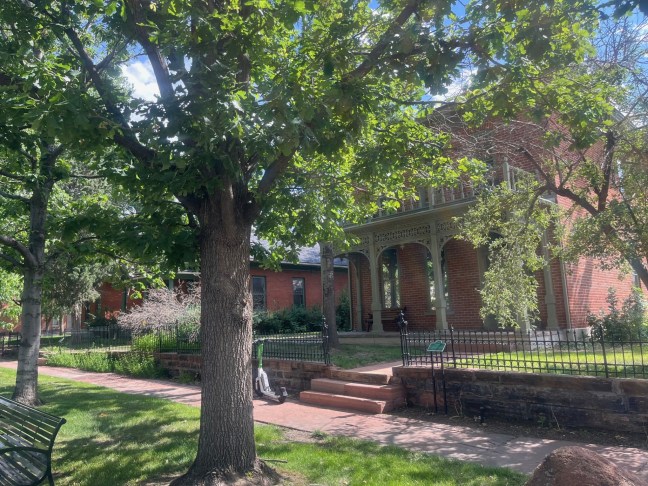
The Auraria Townsite and Ninth Street Historic Park, Denver, Colorado

The Auraria Townsite and Ninth Street Historic Park

Comprised of 1 city block and 14 homes, the Ninth Street Historic Park preserves homes built between 1872 and 1906. It is located on the Auraria Campus, which holds the colleges of the University of Colorado Denver, the Community College of Denver and the Metropolitan State College of Denver.

In 1858, the town was established by William Green Russell and his brothers who had discovered gold in the nearby area. The first two houses were built in 1872.

The park is the oldest restored residential area within the City of Denver. The block was saved from demolition due to a grassroots movement in the 1970s. The park officially opened in 1977.

Historical Marker Inscription
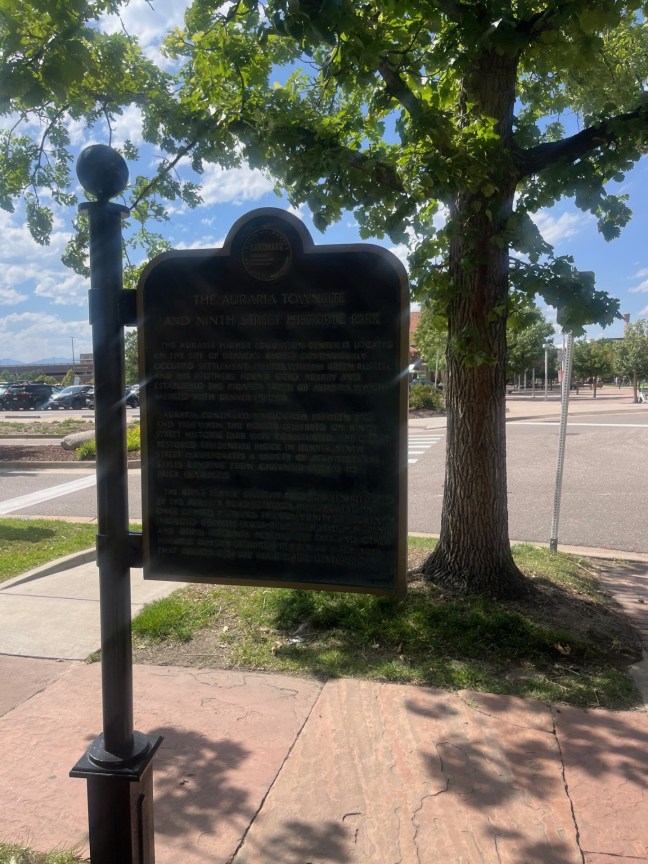
The Auraria Townsite and Ninth Street Historic Park Historical Marker, Denver, CO

The Auraria higher education center is located on the site of Denver’s oldest continuously occupied settlement. In 1858, William Green Russell and his brothers found gold nearby and established this pioneer town of Auraria, which merged with Denver in 1860.

Auraria continued to flourish between 1872 and 1906 when the houses preserved on Ninth Street Historic Park were constructed. The oldest restored residential block in Denver, Ninth Street incorporates a variety of architectural styles ranging from Carpenter Gothic to Brick Bungalow.

The city’s ethnic diversity also has been reflected by the Auraria neighborhood. Arapahoe Indians once camped here, and the community subsequently included German, Scots-Irish, Jewish, Hispanic and other residents. Ninth Street Park and other historic campus buildings remain as a reminder that Auraria was the place where Denver began.

Location

39° 44’ 31.170” N, 105° 0’ 15.490” W

Ninth Street Historic Park, Ninth Street Park, Denver, CO  80204, United States
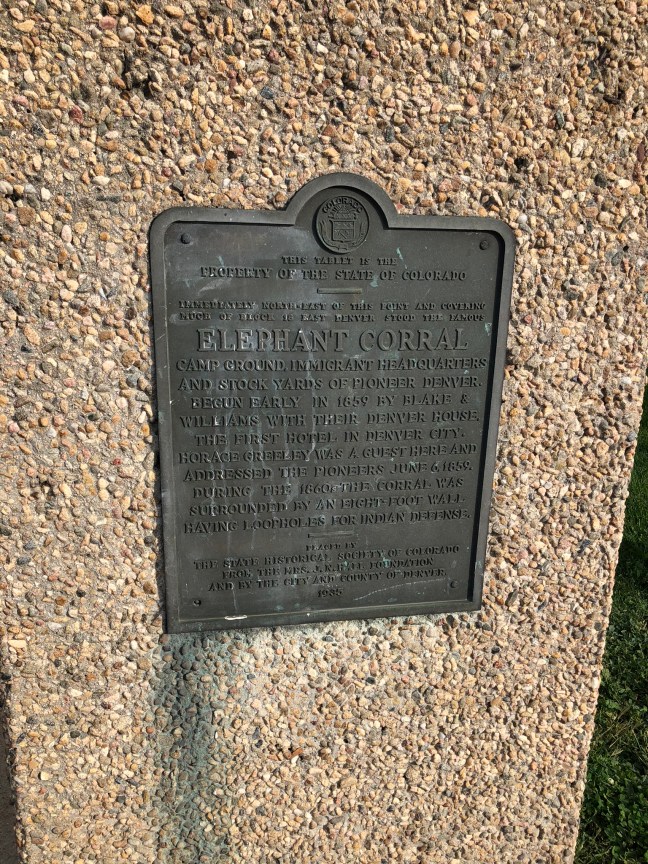
Elephant Corral, Denver, CO

While the origins of the name are murky, some people believe it comes from the old saying “Seeing the Elephant”, which was a gold rush slogan. Located in Lower Downtown (LoDo) Denver, this marker commemorates a hotel and stable for emigrant families and their animals (no elephants were recorded having been boarded here). It also functioned as a trading post, bar, stockyard and brothel.

People from around the world came to Denver trying to get rich off of gold, including people from the Northeast, Midwest and foreigners from around the world. And, these people needed a place to stay. The original proprietors were said to gather people up from the train station and bring them to the establishment.

Located in the Denver and Auraria settlement, the Elephant Corral was the largest building in the settlement at 32 feet wide and 100 feet long. Started by Charles Blake and Andrew Williams, they eventually sold it to Robert Teats, who made the property even larger and officially named it the Elephant Corral.

Historical Marker Text

Immediately north east of this point and covering much of Block 18 East Denver stood the famous Elephant Corral camp ground, immigrant headquarters and stock yards of pioneer Denver. Begun early in 1859 by Black & Williams with their Denver House, the first hotel in Denver City. Horace Greeley was a guest here and addressed the pioneers June 6, 1859. During the 1860s the corral was surrounded by an eight-foot wall having loopholes for Indian defense.

Location: 39.748597° N, 105.001822° W