
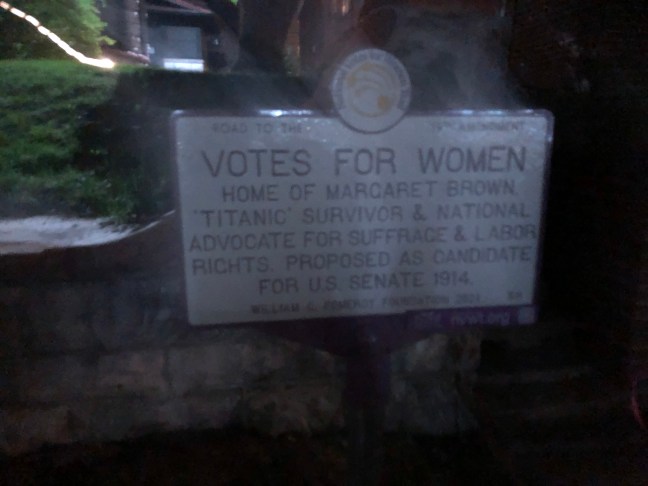
Women received the right to vote in Colorado in 1893. After this momentous occasion, Colorado suffragists strived to get women the right to vote on a national level. A member of this movement was Margaret “Molly” Brown, who became famous because she was a Titanic survivor, the doomed ocean liner that sunk in 1912.
She joined the Congressional Union for Woman Suffrage in 1914 and attended the suffrage convention in Rhode Island. Later, Brown was proposed as a U.S. Senate Candidate by the Congressional Union for Woman Suffrage. She was also involved with different labor issues and was part of the Red Cross in France during World War I.
The marker is part of the National Votes for Women Trail. It sits in front of the Molly Brown House Museum, which was Brown’s old home.
Historical Marker Description
Road to the 19th Amendment
Home of Margaret Brown, ‘Titanic’ survivor & national advocate for Suffrage & Labor Rights. Proposed as candidate for U.S. Senate 1914.
William C. Pomeroy Foundation 2021 58
Location
1320 North Pennsylvania Street, Denver, Colorado 80203, United States
39° 44′ 14.310″ N, 104° 58′ 51.720″ W
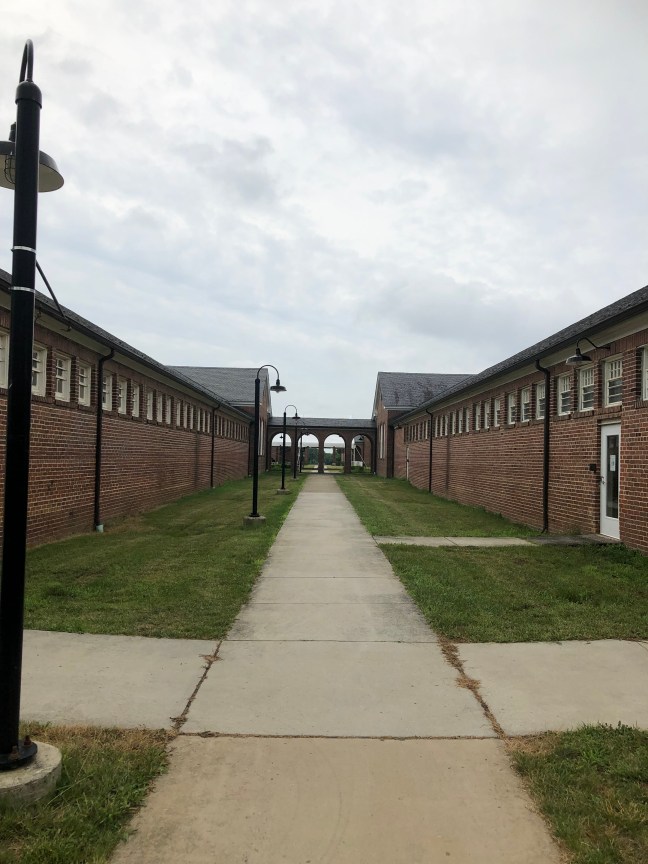
 The historical marker commemorates the imprisonment of 70 suffragists during 1917. The women had been peacefully picketing on the White House sidewalk and were known as the Silent Sentinels.
 Historical Markers of the World