Jennie Wade Historical Marker, Gettysburg, PA

Gettysburg Battlefield, Pennsylvania

Jennie Wade was born in Gettysburg on May 21, 1843. She lived on Breckenridge Street. While historical records aren’t clear, her nickname was either “Ginnie” or “Gin”. She and her mother worked as seamstresses.

Before the war, her sister, Georgia McClellan, married and moved to the house on Baltimore Street in 1862. This house would later be known as the Jennie Wade House.

Since the war was causing bullet holes to blow through houses and others were being confiscated for use as field hospitals, the mother and daughter fled from their home to Georgia’s house. This was both for their safety as well as to assist Georgia, who gave birth an hour before the Confederate Army came to Gettysburg.

To assist the troops, both the Wades and McClellands did their part by baking and serving bread and providing water to Union soldiers. On the morning of July 3rd, Jennie was kneading bread to create more for the soldiers.

It was also during this time that Confederate soldiers began firing on Union soldiers in the area. The McClellan house was hit by over 150 bullets, and one struck Jennie through the soldier, which passed into her heart. At about 8:30 a.m., she died from her wounds.

Jennie is buried in Evergreen Cemetery.

Jennie Wade House Historical Marker, Gettysburg, PA
Copyright Civil War Ghosts – https://gettysburgghosts.com/

Historical Marker Inscription

Jennie Wade, aged 20 years 2 months
Killed here—July 3, 1863
While making bread for the Union soldiers

Location

548 Baltimore Street, Gettysburg, PA 17325

39.82350373110324, -77.23069091876555

McAllister’s Mill Historical Marker

McAllister's Mill Historical Marker

A ruin located on the Gettysburg Battlefield, it was a significant stopping point on the Underground Railroad (UGRR). Said to have been built by James Getty and another person in 1790, in 1836, it became the meeting ground of a group of men whose fathers had fought in the War of Independence. They were there to celebrate the Fourth of July.

Here, the men organized, and James McAllister was named the mill owner and chair. The men passed several resolutions, including ones around freeing the slaves. The Star & Republican Banner, a Gettysburg newspaper, named the meeting the “Anti-Slavery Meeting at McAllister’s”. Over the years, the Anti-Slavery Society became more influential, and many members began helping slaves from Maryland to escape to the North.

During the Battle of Gettysburg, McAllister’s property was caught in the fighting, and many soldiers were buried on the grounds. Little remains of the mill, and it is privately owned.

Historical Marker Inscription

At their grist mill on nearby Rock Creek, James McAllister and his family provided temporary shelter to hundreds of fugitive slaves. Now in ruin, it was part of one of the earliest UGRR networks through which freedom seekers passed on their way north. It was the site of a significant gathering of abolitionists on July 4, 1836, that led to the formation of the Adams County Anti-Slavery Society, an early and influential abolitionist organization.

Location

39° 48’ 25.872” N, 77° 13’ 0.030” W

1382–1398 Baltimore Pike, Gettysburg, PA  17325, United States

Dobbin House, Gettysburg, Pennsylvania

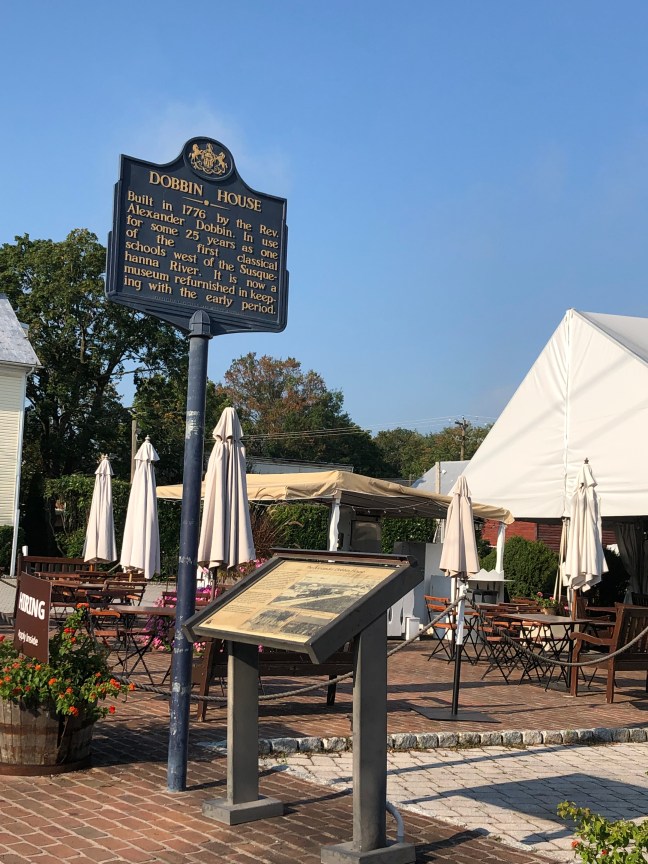
Dobbin House, Gettysburg, PA Historical Marker

Reverend Alexander Dobbin purchased 300 acres within Gettysburg and the surrounding areas in 1774. Dobbin was a Scots-Irish Presbyterian minister and educator. He became one of the most influential people in Gettysburg at the time.

Dobbin built the house in 1776 as both a house and a Classical School. The school taught a combination liberal arts and theology. It later became a part of the Underground Railroad for runaway slaves. It also was a hospital for Confederate and Union soldiers after the Battle of Gettysburg during the American Civil War.

It is the oldest structure in Gettysburg. The house is now a restaurant and tavern that is listed on the National Register of Historic Places.

Historical Marker Inscription

Built in 1776 by the Rev. Alexander Dobbin. In use for some 25 years as one of the first classical schools west of the Susquehanna River. It is now a museum refurnished in keeping with the early period.

Location

89 Steinwehr Ave, Gettysburg, PA 17325

39° 49.352′ N, 77° 13.951′ W


Adams County, Gettysburg, Pennsylvania

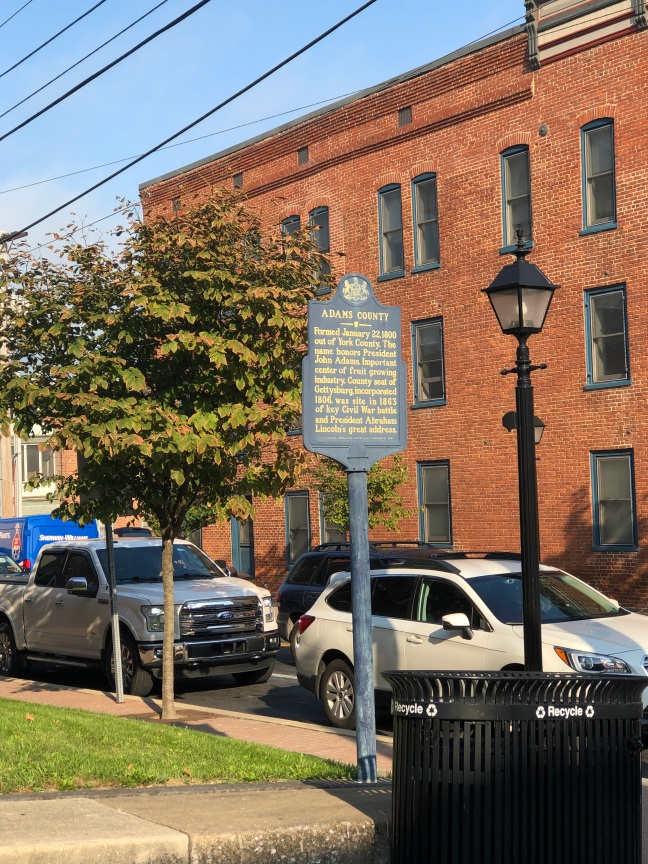
Adams County, Pennsylvania

Gettysburg – the location of a key battle of the American Civil War – is the county seat of Adams County. The county was founded on January 22, 1800. The Battle of Gettysburg was fought between July 1 – 3, 1863.

According to the U.S. Census Bureau, the county is 522 square miles, and the Borough of Gettysburg is located at the center of the county.

Historical Marker Inscription

Formed January 22, 1800 out of York County. The name honors President John Adams. Important center of fruit growing industry. County seat of Gettysburg, incorporated 1806, was site in 1863 of key Civil War battle and President Abraham Lincoln’s great address.

Location

111 Baltimore Street, Gettysburg, PA, 17325 United States

39° 49′ 46.620″ N, 77° 13′ 52.380″