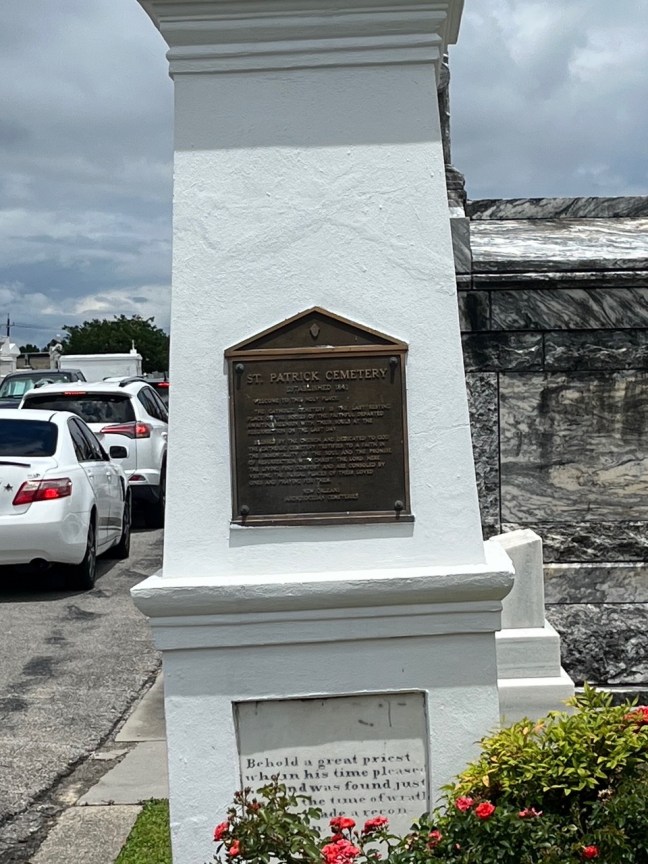
St. Patrick Cemetery Historical Marker, New Orleans, LA

St. Patrick Cemetery Historical Marker, New Orleans, LA

Established in 1841 by the Parish of St. Patrick’s Church, the St. Patrick Cemeteries are located on Canal Street and City Park Avenue. The vestry of St. Patrick’s purchased the land in 1841. The parish soon received permission from the City Council of New Orleans to build the cemetery.

Due to the layout of the site, the cemeteries had to be broken out into three areas. This resulted into three cemeteries: St. Patrick Cemetery No. 1, 2 and 3.

Initially, the cemetery offered in-groun burials due to preferences and cost considerations. Later, above-ground tombs became the preferred method.
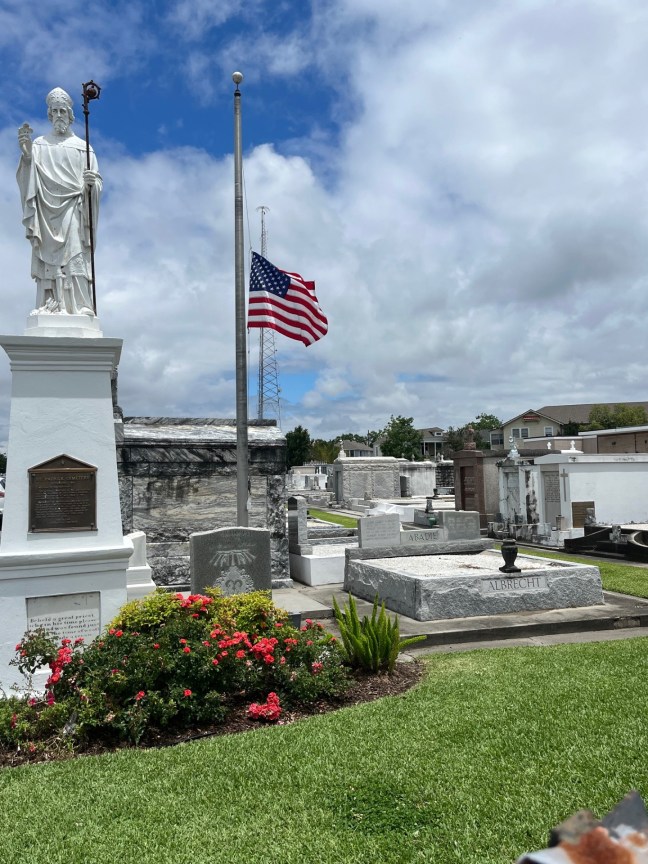
St. Patrick Cemetery Entrance, New Orleans, LA

While St. Patrick No. 2 and 3 have a more traditional layout, St. Patrick Cemetery No. 1 is more chaotic. This is due to the yellow fever epidemics of 1847 and 1853. Thousands died within a short period of time. This meant the dead had to buried quickly, resulting in less organized rows.

Since the initial parish was founded by Catholic Irish immigrants, St. Patrick Cemetery No. 1 is mainly comprised of tombs of the Irish – who were hit especially hard during the epidemics.

No. 2 and 3 reflect the changing demographics of the congregation with English, Italian and French tombs.

The cemetery is still in use.

Historical Marker Inscription

St. Patrick Cemetery

Established 1841

Welcome to the Holy Place

The Catholic Cemetery is the last resting place of the bodies of the faithful departed awaiting reunion with their souls at the resurrection on the last day.

Blessed by the church and dedicated to God the Catholic Cemetery testifies to a faith in the immortality of the soul and the promise of resurrection with Christ the Lord. Here the living find comfort and are consoled by visiting burial places of their loved ones and praying for them.

New Orleans

Archdiocesan Cemeteries.

Location

29° 58’ 57.492” N, 90° 6’ 34.770” W

St. Patrick Cemetery #1, 143 City Park Ave, New Orleans, LA  70124, United States
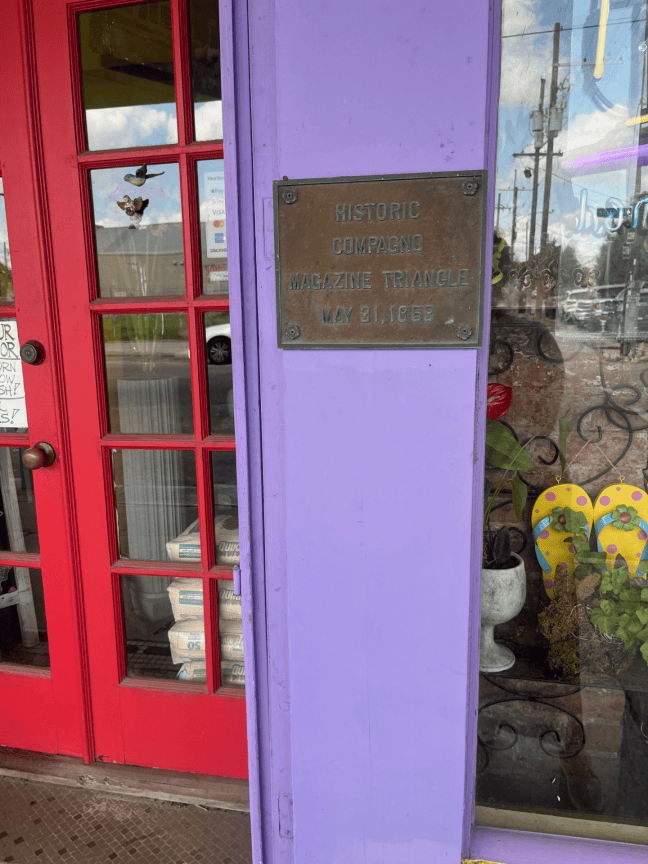
Historic Compagno Magazine Triangle, New Orleans, LA

Historic Compagno Magazine Triangle Historic Marker

The Compagnos were Italian immigrants who moved to New Orleans in 1887. They lived on the second floor of a building located on Felicity and Magazine Streets. The building was triangular-shaped due to its location on the corner of two streets.

The son, Peter, bought the building when he was 20 years old. He opened New Orleans’ first oyster bar, Compagno’s. After Peter died, his son, Nick, took over the operation of the oyster bar, naming it Nick’s Bar. The family owned the restaurant until 1979.

Over the years and several owners, the building started to deteriorate. It was purchased in February 1984 by Joseph Compagno, Peter’s grandson. He restored the building to its original condition.

Historical Marker Inscription

Historic Compagno Magazine Triangle

May 31, 1859

Location

29° 55’ 56.562” N, 90° 4’ 23.040” W

1601 Magazine St, New Orleans, LA  70130, United States

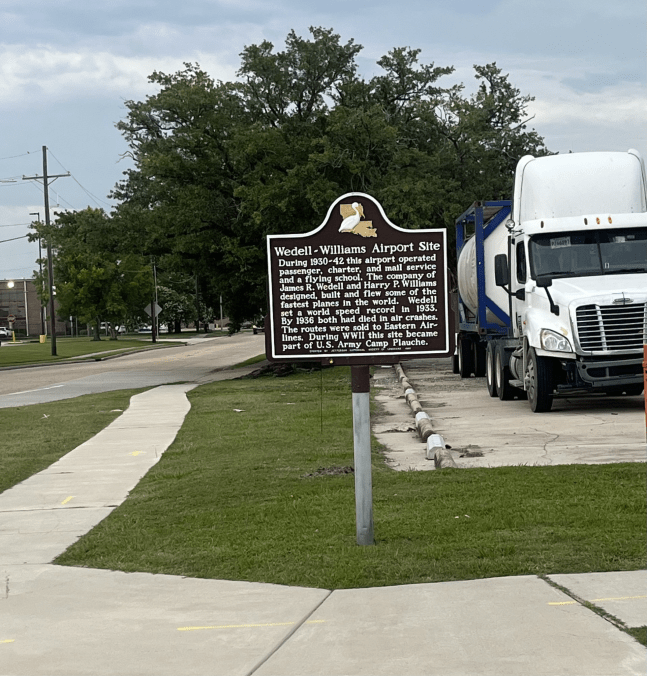
Wedell-Williams Airport Site Historical Marker, New Orleans, LA

Wedell Williams Airport Site Historical Marker, New Orleans, LA

The Wedell-Williams Air Service came into existence on May 1, 1929. It was operated by James Wedell, Vice President, and Harry Williams, President. They had bought out the Menefee Airways in New Orleans, for which Wedell had previously worked.

The company’s original location was Wedell-Williams Airport in Patterson, Louisiana. During this time, however, more air routes were being added due to increased traffic.

The company decided to expand its business into New Orleans. The new airport was finished in 1931. The company’s height was between 1933 and 1934. It began to decline after that, partly because of the new Shushan Airport (now the New Orleans Lakefront Airport). And the death of Jimmy Wedell in 1934 was a major blow to the organization.

Following that, Jimmy’s brother, Walter Wedell, who also worked for the company, died in 1935. Finally, the president of the company, Harry Williams, died in 1936. In 1937, Harry Williams’ widow sold the company to Eddie Rickenbacker, General Manager of Eastern Airlines.

Historical Marker Inscription

During 1930-42 this airport operated passenger, charter, and mail service and a flying school. The company of James R. Wedell and Harry P. Williams designed, built and flew some of the fastest planes in the world. Wedell set a world speed record in 1933. By 1936 both had died in air crashes. The routes were sold to Eastern Airlines. During WWII this site became part of U.S. Army Camp Plauche.

Erected by Jefferson Historical Society of Louisiana, 1990

Location

29° 56’ 54.852” N, 90° 10’ 51.102” W

Walmart Supercenter, 5110 Jefferson Hwy, New Orleans, LA  70123, United States