Blog

Jonathan Jasper Wright Law Office

Jonathan Jasper Wright Law Office Historical Marker

From 1879 until 1885, a two-story stucco building that was built around 1876 served as the law office for Justice Jonathan Jasper Wright. He was the first African American State Supreme Court Justice.

Wright’s parents were slaves that had escaped to Springville, Pennsylvania. Wright was born on February 11, 1840, and studied law at the Lancasterian Academy in Ithaca, New York. In 1866, he passed the Pennsylvania bar exam.

At the end of the Civil War, he first traveled to Beaufort, South Carolina, to teach newly freed slaves. Wright began practicing law in South Carolina in the late 1860s and was elected to the Supreme Court of South Carolina as an Associate Justice in 1870.

He eventually resigned from the court in 1877. He did this in protest of the election of Governor Wade Hampton III in 1877, a campaign that was marked by violence and known for suppressing black votes in parts of the state by Hampton supporters known as “Red Shirts”. This year was also the end of Reconstruction as federal troops were removed from the South, and Jim Crow laws began reversing much of the gains made by African Americans during the previous time period.

In 1879, Wright opened his law office at 84 Queen Street. He died on February 18, 1885 and is buried at the Calvary Episcopal Church cemetery.

Historical Marker Inscription

Jonathan Jasper Wright Law Office Historical Marker

Front:

Jonathan Jasper Wright (1840-1885), the first African American in the U.S. to sit as a justice on a state supreme court, practiced law here from 1877 until his death in 1885. Wright, a native of Pa., was educated at Lancasterian Academy in Ithaca, N.Y. He came to S.C. in 1865 as a teacher for the American Missionary Association and was later a legal advisor to freedman for the Freedmen’s Bureau.

Back:

Wright wrote that he hoped to “vindicate the cause of the downtrodden.” He was a delegate to the S.C. constitutional convention of 1868 and a state senator from 1868-70. Wright, elected to the S.C. Supreme Court in 1870, resigned in 1877 due to political pressure. After he left the bench he practiced law, helped Claflin College found its Law Department, and became is Chair in Law. He died or tuberculosis in 1885.

Location:

84 Queen Street, Charleston, SC 29401
32.77817277207629, -79.93254871534323

Old Spanish Trail North Branch

Old Spanish Trail North Branch: Colorado Historical Marker

From about 1830 to 1848, the Old Spanish Trail was used to bring textiles from Santa Fe to Los Angeles, which were then traded for mules and horses for the New Mexico and Missouri markets. The trail is considered to be one of the most difficult trails in the United States.

Originally part of ancient, Native American Indian trade routes (one part of which was in use for nearly 1,000 years), the trade routes were connected later by Spanish, Mexican and American traders.

The trail was divided into two routes: the North Branch went north into the San Luis Valley in Colorado, which then went west over Cochetopa Pass, following the Gunnison and Colorado Rivers. It eventually connected with the South Branch near the Green River. The South or Main Branch went northwest to Green River, Utah, passing the Colorado San Juan mountains.

There have been many efforts over the years to preserve the Old Spanish Trail and make it part of the National Historic Trails system.

Historical Marker Inscription

This sign marks an important junction of the Old Spanish Trail. Both forks, east and west, of the North Branch of this Trail converged at Saguache before continuing west of Cochetopa Pass and on to Los Angeles.

The Old Spanish Trail was the principle mule pack route for explorers and traders until 1848, evolving into a wagon road and currently a modern highway.

The purpose of this sign is twofold: first, to note the 4th Annual Conference of the Old Spanish Trail National Association that convened at Saguache, Colorado on June 21-22, 1997; and second, to celebrate the vital contribution of the early trails, before which, all life was limitation.

Location:

Located in Saguache, Colorado, at the intersection of 8th Street (Highway 285) and Christy Avenue in a park.

38° 5.132′ N, 106° 8.527′ W.


Old Sandusky Post Office

Old Sandusky Post Office in Ohio

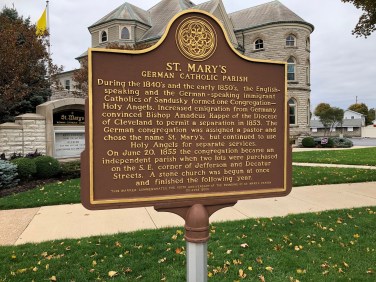
On a corner near the heart of Sandusky, Ohio, a town founded in 1817, sits the old post office. Located on Jackson Street, this imposing Neoclassical structure served as the third post office for the town. The first post office in the town was built in 1820 on Water Street.

While traveling to get mail from the post office was common during the early years, on December 1, 1882, Sandusky began offering free mail delivery. As the needs of the town grew so did the need of a larger post office, which was why the new one was built on the corner of West Washington and Jackson Street between 1925 and 1927. This one took the place of a smaller post office that had been located at Columbus Avenue and Market Street.

Located at the highest point above sea level in Sandusky, this building served as the main post office for 60 years. Besides the post office, the building also housed the National Weather Service, U.S. Customs, FBI and armed forces recruiting.

This location also became too small, and the post office was once again moved to a new space (2220 Caldwell Street) in 1986. Now, the old post office is home to the Merry-Go-Round Museum, which has occupied the space since 1990.

Historical Marker Inscription

Old Sandusky Post Office Historical Marker

The U.S. Post Office building, Sandusky’s third, opened in 1927, replacing the smaller building at Columbus Avenue and Market Street. It is notable for its fine Neoclassical-style architecture and its unusual curved portico. It was added to the National Register of Historical Places in 1982. For sixty years it served as Sandusky’s business center, where merchants shipped and received goods and banks transferred money. During this time it also housed offices for several federal agencies, including U.S. Customs, the National Weather Service, armed forces recruiting, and the Federal Bureau of Investigation. The U.S. Geological Survey disk embedded in the front steps serves as a benchmark for surveyors and scientists. Closed in 1987, the historic Sandusky Post Office building reopened as a museum in 1990.

The Ohio Bicentennial Commission, The Longaberger Company
Huron City Schools
The Merry Go Round Museum
The Ohio Historical Society
2001

Location:
301 Jackson St, Sandusky, OH 44870
41.4539° N, 82.7129° W

Cedar Point, Sandusky, Ohio

Cedar Point, Sandusky, OH

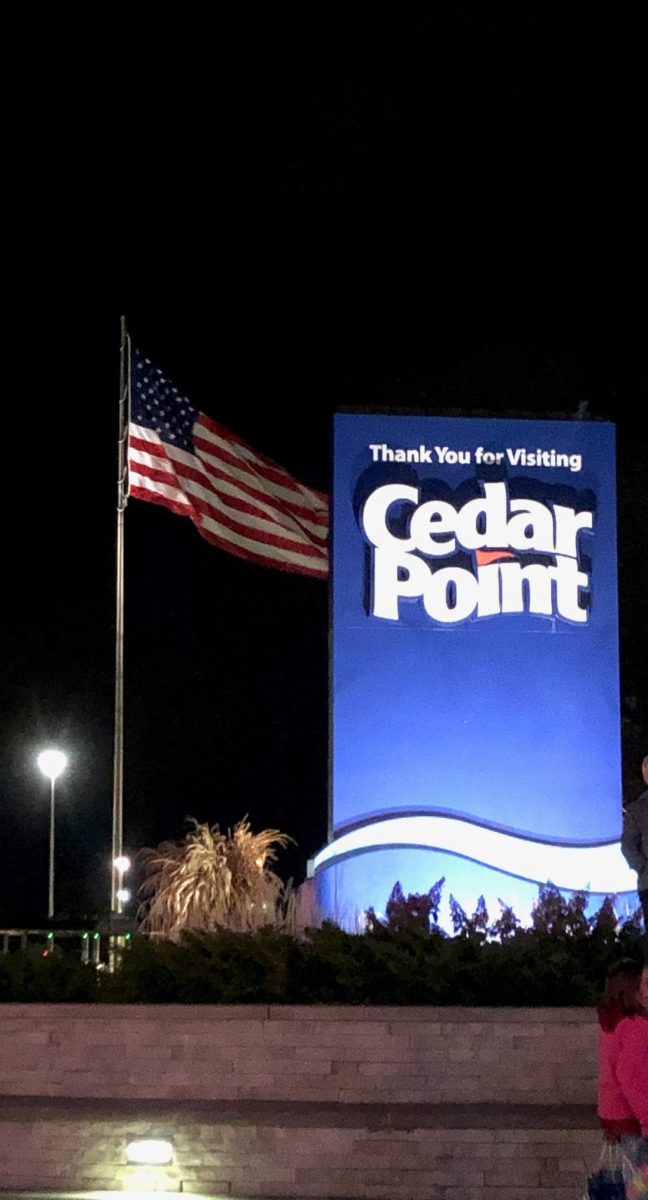
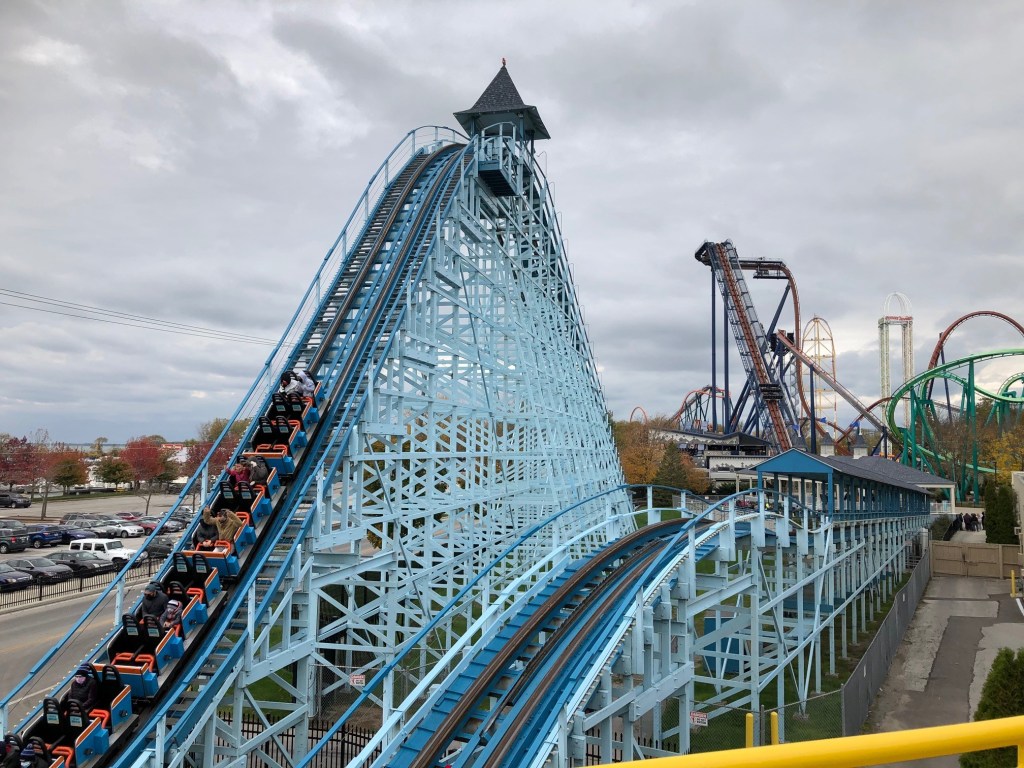
Located on a peninsula in northern Ohio, Cedar Point sits right on the banks of Lake Erie, one of the Great Lakes. Best-known for the amusement park that holds the same name, the location was originally a site for a lighthouse and a fisherman’s port. By 1867, the peninsula became part of a small railroad line, allowing developers to build attractions, including picnic areas and bath houses. The first official season of the amusement park was 1870 when different forms of entertainment was introduced.

But the reason why this amusement part is so famous actually came later in 1892 when the first roller coaster – the Switchback Railway – was built. The park went through many changes, including being purchased by the Cedar Point Pleasure Resort & Company, which opened new rides and offered overnight accommodations. In 1954, part of the area become a bird sanctuary. By 1965, the park had begun drawing more than two million visitors.

Since then, the park has steadily grown, and it has become known as the “Roller Coaster Capital of the World” and has held numerous roller coaster world records.

Historical Marker Inscription

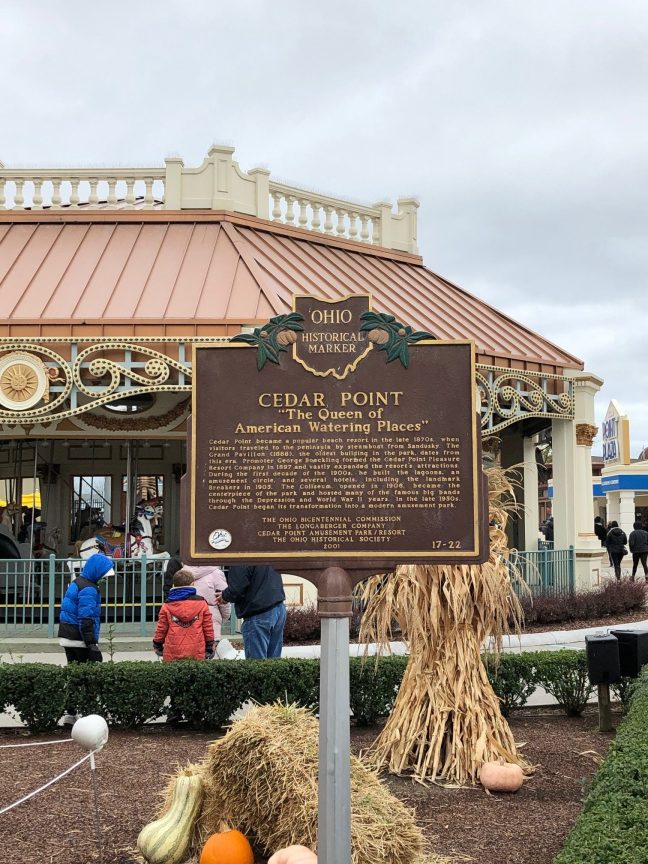
Cedar Point Amusement Park Historical Marker

Cedar Point
“The Queen of American Watering Places”

Cedar Point became a popular beach resort in the late 1870s when visitors traveled to the peninsula by steamboat from Sandusky. The Grand Pavilion (1888), the oldest building in the park, dates from this era. Promoter George Boeckling formed the Cedar Point Pleasure Resort Company in 1897 and vastly expanded the resort’s attractions. During the first decade of the 1900s, he built the lagoons, an amusement circle, and several hotels, including the landmark Breakers in 1905. The Coliseum, opened in 1906, became the centerpiece of the park and hosted many of the famous big bands through the Depression and World War II years. In the late 1950s, Cedar Point began its transformation into a modern amusement park.

The Ohio Bicentennial Commission
The Longaberger Company
Cedar Point Amusement Park/Resort
The Ohio Historical Society
2001

Location:
1 Cedar Point Dr, Sandusky, OH 44870
41.4822° N, 82.6835° W

Ralph Carr Memorial Highway

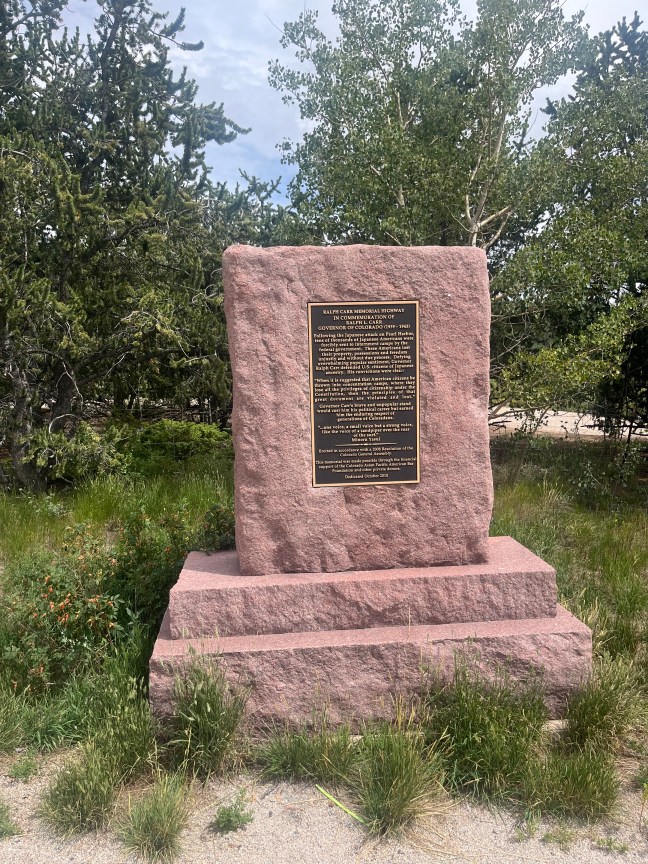
Ralph Carr Memorial Highway Historical Marker Colorado

In the same place as the South Park historical marker on 285 at Kenosha Pass is another marker dedicated to Ralph Carr, a former governor of Colorado. Serving during World War II, Carr was the only Western governor to oppose the internment of Japanese Americans after the bombing of Pearl Harbor. He even gave speeches and wrote a letter published in the Pacific Citizen newspaper of the Japanese American Citizens’ League to encourage Japanese Americans to come to Colorado.

While only serving as governor for one term due to his resistance to the internment push, he did make Denver a popular postwar destination for Japanese Americans after they were released from internment camps. There was a large Japanese contingent in Colorado from the 1950s to the 1960s.

Carr’s support for Japanese Americans cost him the governorship, and he lost a Senate campaign in 1942. He tried running for Colorado governor again in 1950, but died right before the election at 62 years old.

Historical Marker Inscription

Ralph Carr Memorial Highway in Commemoration of Ralph L. Carr Governor of Colorado (1939-1943)

Following the attacks of Pearl Harbor, tens of thousands of Japanese Americans were forcibly sent to internment camps by the federal government. These Americans lost their property, possessions and freedoms unjustly and without due process. Defying overwhelming popular sentiment, Governor Ralph Carr defended U.S. citizens of Japanese ancestry. His convictions were clear:

“When it is suggested that American citizens be thrown into concentration camps, where they lose all privileges of citizenship under the Constitution, then the principles of that great document are violated and lost.”

Governor Carr’s brave and unpopular stand would cost him his political career but earned him the enduring respect of generations of Coloradans.

“…one voice, a small voice but a strong voice, like the voice of a sandpiper over the roar of the surf.” – Minoru Yasui “

Erected in accordance with a 2008 Resolution of the Colorado General Assembly.

This memorial was made possible through the financial support of the Colorado Asian Pacific American Bar Foundation and other private donors.

Dedicated October 2010

Location: US-285, Lake George, CO 80827

Latitude: 39° 24′ 12.432″ N Longitude: 105° 45′ 16.152″ W

South Park, Colorado

South Park Colorado Historical Marker

Perched atop Kenosha Pass on a small turnout is a sign welcoming you to South Park. The name South Park was first used by hunters and trappers during the 1840s. The area was inhabited by the Utes until white settlers began moving in during the middle of the 1800s. The Southern Arapaho also encroached on Ute territory following the buffalo.

By the 1850s, however, the area would become known for three gold strikes, driving gold rushers to South Park, which caused gold camps to be created throughout this wide open country. Between 1860 to 1863, $1.5 million worth of gold was extracted from the county.

John C. Fremont also explored this location during his 1844 (second) expedition. During that time, the area was called Bayou Salade (a mispronunciation of Valle Salado).

South Park is known for its grasslands, which lie on a basin between Mosquito and Park Mountain Ranges, which are part of the Rocky Mountains. These mountains range from 9,000 feet to 10,000 feet (3,000 meters).

Historical Marker Inscription

Spread before you lies the famous
SOUTH PARK
entered by Kenosha Pass, elevation 10,000 feet The Bayou Salado of early trappers, favorite Indian hunting ground and frequent battleground. Visited by Z. M. Pike in 1806. Crossed by J. C. Fremont in 1844. Permanent settlement inaugurated by gold discoveries in 1859.

Location: US-285, Lake George, CO 80827

Latitude: 39° 24′ 12.432″ N Longitude: 105° 45′ 16.152″ W

The Great Platte River Road

The Great Platte River Road Marker

The Great Platte River Road was a travel corridor that ran alongside the Platte River in Nebraska and Wyoming. The road was nearly 800 miles and ran from the Second Fort Kearny to Fort Laramie.

Known as the “grand corridor of America’s westward expansion” – or the Superhighway of the time – it was used from 1841 to 1866. The road was included in many other western routes, including the Mormon Trail, Trapper’s Trail, California Trail, Oregon Trail, Pony Express and military routes between Fort Laramie and Fort Leavenworth.

There is now a monument and museum dedicated to the people who took the Platte River path through Nebraska. It’s called the Great Plate River Road Archway Monument, and there is a fee to enter.

Historical Marker Inscription

This is the Platte River Valley, America’s great road west. It provided a natural pathway for westward expansion across the continent during the nineteenth century. Here passed the Oregon Trail, following the South Platte River along much the same route as the highway over which you now travel. Beginning in 1841, nearly 250,000 travelers crossed the plains to Oregon and California over this important overland route. Here at O’Fallon’s Bluffs, the wagon trains faced one of the most difficult and dangerous spots on the trail. The Platte River cut directly against the bluff, making it necessary to travel the narrow roadway over O’Fallon’s Bluffs. Deep sand caught the wagon wheels, and Indian attacks were always a danger. A few feet southeast of this point, ruts made by thousands of wagon wheels still remain. Although first traveled primarily by immigrants, the trail was later used by the Pony Express and became an important freight and military route. With the completion of the trans-continental railroad across Nebraska in 1867, travel on the trail declined. Although the dangers and hardships faced by early travelers no longer exist, the Great Platte Valley route remains an important modern thoroughfare across Nebraska and across the nation.

Location: Sutherland Westbound I-80 Rest Area, 5 miles west of Hershey, NE

41.141302, -101.090121

Boyhood Home of John Wayne

John Wayne Birthplace, Brooklyn, WI

Marion Morrison was the son of Clyde and Molly Morrison. The family lived in Brooklyn, IA, in 1909 and again from 1913 to 1914. Marion had been born a short distance away in Winterset, IA, on May 26, 1907. While the name Marion Morrison wouldn’t be recognizable for most people, the actor that he would grow up to be would be known the world round: John Wayne.

Family History

Marion’s father was a registered pharmacist who had been hired by the Rainsburg & Dillsaver Drug Store, which was located in the town of Brooklyn in the business district on Jackson Street. The family was only in the area for a short while when Clyde decided to buy a pharmacy in Earlham, leaving the town in January 1910.

In January 1913, the family returned to Brooklyn and took up residence at the house on 717 Jackson Street. In 1914, the family would finally move away from Brooklyn for good, but not before a fire erupted on the porch of the home due to sparks from a pot-bellied stove, burning many of the items that had been prepared for the move. The incident left a lasting impression on the six-year-old Marion.

The family moved to California, and the rest they say is history.

Historical Marker Inscription

Boyhood Home of John Wayne

The Clyde Morrison family moved from Winterset to this house in 1909 and lived here again in 1913-14. Mr Morrison was a pharmacist employed by the Rainsburg Drug Store, located near the south end of Jackson Street on the west side. His elder son, Marion, attended kindergarten at the Brooklyn Elementary School and entered first grade there in the fall of 1913.

When Mr Morrison was diagnosed with tuberculosis he moved his family to California in 1914. In later years the Morrison’s older son, Marion, became the legendary Hollywood actor known as John Wayne.

Location: 717 Jackson Street, Brooklyn, IA 52211

Coordinates: 41.735458 N, -92.445128 W

First Wagons Used on Santa Fe Trail

The Santa Fe Trail was a two-way commercial highway that connected Missouri to Santa Fe. Used between 1821 and 1889, it was frequented by both American and Mexican traders. It was also a path that the U.S. Army used to invade Mexico during the Mexican-American War.

Besides commerce, the Santa Fe Trail was also used during the Gold Rush by people heading to gold fields in both California and Colorado as well as by missionaries, emigrants and more.

The expansion of the railroad into Santa Fe in February 1880 brought an end to the trail.

Historical Marker Inscription

“First Wagons Used on Santa-Fe Trail Crossed Here in 1822.”

Accompanying sign:

“Stretching 900 miles from Franklin, Missouri, to Santa Fe, New Mexico, the Santa Fe Trail as one of the most important North America trade routes of the nineteenth century. Begun in 1821, it was used for 60 years until the arrival of the railroad. It was a hardy traveler who attempted the journey. Wagon trains up to 500 wagons long traversed the trail through blizzards, stampedes, dust storms, fires, disease, and Indian attacks. And often, they lacked for water.

Here, near two landmarks of the trail, Round Mound and Rabbit Ears, wagon trains camped for the night. William Becknell, the trader who inaugurated the Santa Fe Trail in 1821, came this way on his return trip east while forging the smoother Cimarron Route across the plains.

Two-way Street

Unlike the great emigrant trails to the north, the Santa Fe Trail ran both ways, with traders from Mexico, or returning U.S. traders, carrying Mexican silver, gold, mules, buffalo and beaver pelts to waiting markets in Missouri.”

Location: US-87 West, Clayton, New Mexico
Latitude: 36

Location: US-87 West, Clayton, New Mexico
Latitude: 36 degrees 33′ 59.520″ N
Longitude: 103 degrees 34′ 1.152″ W

Capulin Volcano

Driving down Highway 325 in New Mexico near Raton, you can’t miss the sign for Capulin Volcano National Monument. This national monument is an extinct cinder cone volcano that is part of the 8,000 square mile Raton-Clayton Volcanic Field. Designed to provide visitors with a look at the geology of Northwestern New Mexico, you can also view four states from the rim of the volcano.

The elevation of the volcano is 8,182 feet high and 400 feet deep, and it is approximately 60,000 years old. The name is derived from a type of choke cherry, Prunus virginiana. The area became a national monument on August 9, 1916.

Historical Marker Inscription

“An outstanding example of an extinct volcanic cinder cone, Capulin Volcano was formed as early as 10,000 years ago. In cinder cones, lava pours from cracks in the base rather than over the top. Capulin itself was the escape hatch for cases that blew lava fragments into the air where they solidified and landed red hot on the cone.”

Location: 46 Volcano, Capulin, NM 88414
36.7811 degrees North, 103.9695 degrees West